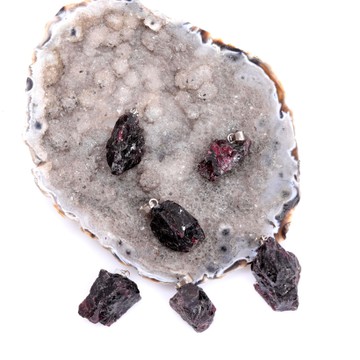
How are rocks formed? This question came up in science and geography classes back in primary school. So how about refreshing your memory and learning what you did not know on the subject?
Rocks are among the oldest materials on Earth's surface, and they usually form through natural processes. The formation of rocks passes through different stages, shaped by geological events and natural forces. These processes give rise to various types of rock. Understanding how rocks form is important for understanding the geological history and natural processes of the world. Rock formation usually falls into three main types: the formation of sedimentary rocks, the formation of igneous rocks and the formation of metamorphic rocks. Each of these is tied to different natural processes and produces different types of rock.
The formation of sedimentary rocks usually begins with the accumulation of sediment. This accumulation usually takes place under or near water, and various minerals come together to form sedimentary rocks. Sedimentary rocks come in types such as sandstone, claystone and limestone, and they usually form from layers that build up over the years. Igneous rocks, on the other hand, usually form when magma or lava cools. Magma is molten rock material found deep within the Earth, and it cools and solidifies when it reaches the surface. This cooling produces different types of igneous rock, such as granite and basalt. The crystal structure of igneous rocks can vary with the cooling rate.
Metamorphic rocks usually form under high temperature and pressure. In this process, existing rocks go through physical and chemical changes under high temperature and pressure and become new types of rock. Metamorphic rocks come in types such as marble, schist and gneiss, and they usually form through mountain building, volcanic activity or tectonic movements. Rock formation usually results from natural processes that take millions of years. In this process, geological events, natural forces and environmental factors produce different types of rock and shape the geological structure of the world. Understanding how rocks form contributes to the science of geology, and it also matters in fields such as mining, construction and environmental science.
What Is a Rock?
In the shortest terms, a rock is defined as an aggregate of minerals. Rocks are made up of minerals that come together.
The old Turkish word for rock was 'sahre'. In other languages it is expressed with the words 'gestein', 'roche' and 'rock'.
Rocks are divided into three basic groups: metamorphic, igneous and sedimentary. It is possible to say that each of these includes different categories of its own.
The branch of science that studies rocks is called 'petrography'. It is one of the sub-branches of geology.
Rocks are among the most basic building blocks of our planet, and they are solid natural materials formed by the combination of one or more minerals. The formation of rocks is closely tied to the movements of the Earth's crust and the internal and external dynamics of our planet. Rocks are divided into three main groups according to how they form: igneous, sedimentary and metamorphic rocks.
Igneous Rocks: These rocks form when magma, the molten rock material deep within the Earth, cools and solidifies. When magma reaches the surface and cools quickly, volcanic or extrusive rocks form. When it cools slowly deep within the Earth and crystallizes, intrusive rocks form. Granite and basalt, for example, belong to this group.
Sedimentary Rocks: Rocks that are worn down and broken apart by external forces are carried by natural carriers such as water and wind. They settle and harden in places such as lakes and seas. Sedimentary rocks form as a result of this process. They are divided into three subgroups: physical (clastic), chemical and organic. Sandstone, limestone and coal can be given as examples of this group.
Metamorphic Rocks: These rocks form when existing igneous or sedimentary rocks undergo chemical and physical change under high temperature and pressure. In this process the mineral structure and texture of the rocks change, and new types of rock appear. The transformation of limestone into marble and of granite into gneiss, for example, are results of this process.
These three main groups of rocks are critically important for understanding the geological history of our planet and how its surface took shape. Rocks are also of great economic value, and they are used in many fields, from mining to construction and from art to technology.
What Are Rocks?
Rocks are solid materials that make up the Earth's crust and form from combinations of various minerals. Divided into three main groups, rocks are classified as igneous, sedimentary and metamorphic. Igneous rocks form when molten magma deep within the Earth's crust cools and solidifies. This process can take place underground (plutonic) or at the surface (volcanic). Stones such as granite and basalt are examples of igneous rocks.
Sedimentary rocks form when various mineral particles, organic matter and sediments that have built up over a long period are pressed together under pressure. These rocks usually form in areas with water sources such as rivers, lakes and seas. Sandstone, limestone and schist are well-known examples of sedimentary rocks. Because sedimentary rocks hold traces of past life and fossils, they are very valuable for geological research.
Metamorphic rocks form when existing rocks are exposed to high temperature and pressure and go through structural changes. In this process the mineral structure of the rocks changes, and they turn into a new crystal structure. Stones such as marble and gneiss are among the metamorphic rocks. Metamorphic rocks are usually found in regions with intense tectonic movement, such as mountain-building zones.
Rocks play a key role in understanding the Earth's natural structure and in deciphering the history of the crust. Geologists study the structure of rocks to understand the evolution of the planet. Rocks are also used as building material, and they hold an important place in human life.
Types of Rocks
Types of rocks are solid materials found in the Earth's crust, based on different formation processes, and they are divided into three main groups: igneous, sedimentary and metamorphic rocks. Igneous rocks form when magma, the molten rock material beneath the Earth's crust, cools and solidifies. If this happens slowly deep within the Earth, plutonic rocks (for example, granite) form. If the magma cools quickly near the surface or at the surface, volcanic rocks (for example, basalt) form. Igneous rocks offer important information about how the Earth formed.
Sedimentary rocks form when pieces of rock worn down by wind, water or ice on the Earth's surface are carried, pile up, and over time are compressed and hardened. Sedimentary rocks are usually recognized by their layered structure, and because they hold fossils from past geological periods, they are of great importance in scientific research. Rocks such as sandstone, limestone and schist fall into this category, and they can form in riverbeds, lake bottoms or on the ocean floor.
Metamorphic rocks form when existing rocks go through structural transformations under high temperature and pressure. During this process the mineral structure and texture of the rocks change completely. For example, when limestone goes through metamorphism it becomes marble, and granite becomes gneiss. Metamorphic rocks usually result from large geological movements such as mountain building.
These three main types of rock help us understand the geological structure and history of the Earth, and they are also used as raw material in many industries. Constantly turning into one another in nature's cycle, the types of rock play a basic role in the evolution of our planet.
Why Are Rocks Important?
Rock types reflect the natural environment in which they formed. For this reason they are seen as a kind of natural record. The answer to the question of which stages the Earth's crust went through in its geological development comes from the traces we read in rocks.
For that reason, rocks can be considered living witnesses of Earth's history and its most valuable documents.
The rocks that make up mountains, ocean floors and continents have never lost their economic and human importance at any point in human history.
So, how can we answer the question of why rocks are important?
- The permeability, solubility and erosion resistance of rocks play a major role in the formation and development of landforms.
- The minerals in the water we drink and the salt in our food come from rocks in the Earth's crust.
- The clay used for making ceramics, the marble that construction depends on, and the uranium and coal used in energy production all come from rocks. Cement is made from a rock called limestone.
- Rubies, diamonds, gold and similar valuable minerals are found within rocks.
- Knowing the properties of rocks is very important in civil engineering. Road projects, bridges, dams and buildings are designed according to the rock (ground) properties of the site.
- Rocks play a critical role in the chemical and physical properties of soil. Soils of volcanic origin are more fertile for agriculture.
- Knowledge of rocks is needed for hydrological studies of springs, groundwater, lakes and streams.
As noted above, there are different types of rock, depending on how long they take to form and how they form. Chemical composition, texture and mineral structure also create differences between rock types.
Before going into detail, we can say this: all rocks originate from the cooling of the magma layer beneath the Earth's crust. We can call this the first type of rock. These are known as 'igneous' or 'magmatic' rocks.
When these rocks are exposed to various factors, different rock types form. Fluid lava from magma cools and becomes rock. We can think of this as water cooling and turning into ice.
Volcanoes, lava eruptions and similar geological events play an active role in rock formation. In that case, cooling happens quickly. Lava reaches the surface at a temperature of at least 1,000 degrees Celsius. When this lava comes into contact with water or ice, it solidifies and rock formation takes only seconds. At other times, it solidifies in the lower layers of the Earth's crust.
As summarized above, these rocks form when lava or magma cools and solidifies.
Another name for this type of rock is 'Deep-Seated Rocks'. If magma cools and solidifies deep underground, the resulting rocks are named this way. 'Granite' is an example of this type of rock.
Also known as 'Surface Rocks', volcanic rock types form from magma that cools and solidifies. If this happens at the surface, volcanic rocks form. Basalt, pumice and volcanic glass are some examples.
As magma rises from the depths toward the Earth's surface, it begins to cool. Cooling in the areas close to the surface produces semi-deep, or vein, rocks. (For example, 'Diabase' is one of them.)
Sedimentary rock formation, also known as 'sedimentary' formation, is different from the others. This is because these rocks form when previously existing rocks break apart and are transported. The accumulation of existing rocks in a depositional environment, or their turning to stone, also gives rise to sedimentary rocks.
When rocks break apart, small-grained structures are exposed. Millions of years under pressure and hardening produce sedimentary rocks.
The remains of organisms that lived in the past are another component of the sedimentary rock group. Fossils come out of these rocks.
They generally have a layered structure. They are divided into subclasses such as biochemical (organic), clastic and chemical.
Here are some examples:
- Organic Sedimentary Rock: Coal.
- Clastic Sedimentary Rock: Sandstone, claystone, gravel stone.
- Chemical Sedimentary Rock: Limestone (lime rock), gypsum, rock salt, and the stalagmites and stalactites found in caves.
- Other Sedimentary Rocks: Travertines, chalk, coral rock, amber.
Characteristics of Chalk Rock
Chalk rock is a sedimentary rock that is widespread in the Earth's crust and is generally white and powdery. Chalk usually forms on sea floors and in deep-sea environments, and is an organic calcium carbonate deposit that hardens over time. The main component of chalk rock is usually made up of calcite crystals. Calcite is the crystal form of the mineral calcium carbonate (CaCO₃), and this feature determines the white color and texture of the rock. Chalk rock is historically very important, because this rock holds an important place in a large part of geological time, especially in very ancient eras of the Earth's crust such as the Cretaceous Period. The formation of chalk rock is a process that takes millions of years, and it usually begins with the accumulation of the remains of marine organisms, especially calcareous plankton and shelled sea creatures. These remains build up on the sea floor over time, are compressed by the movements of the Earth's crust, harden and turn into chalk rock.
-
Color: We can say that chalk rock is generally white, gray or cream in tone. Over time, however, especially because of organic matter deposits, it can also appear in other colors such as yellow, brown or pink.
-
Texture: The texture of chalk rock tends to be powdery and flaky. For this reason, it can easily be broken by hand or crumbled. The rock is known for its soft structure and is generally not very durable.
-
Density and Hardness: The density of chalk rock is generally low, and its hardness ranges from 1 to 2 on the Mohs scale, which gives it a fairly soft structure. The fact that chalk rock can easily be crushed by hand or flake apart is one of its most characteristic features.
-
Solubility: Chalk rock dissolves easily in acidic environments. This feature comes from the tendency of calcium carbonate to react with acidic solutions. For this reason, chalk rock can erode over time, especially in acid rain or naturally acidic environments.
-
Lightness: Chalk rock is a fairly light rock, which allows it to move and be transported easily in the Earth's crust.
Chemical Properties of Chalk Rock
The main component of chalk rock is the mineral calcium carbonate (CaCO₃). Calcium carbonate is a mineral that occurs in nature in various forms and is generally white. It has chemical properties similar to those of other rocks such as limestone, marble and lime rock. In addition, chalk rock can contain organic matter, because the accumulation of organic materials played an important role in the formation of this rock, which historically built up together with organic remains in marine environments.
Under the effect of heat and pressure, minerals go through a fundamental process of change. The minerals changed in this way recrystallize and turn into metamorphic rocks.
Here is a fitting example:
Imagine an area made of limestone. A volcano erupts near this area and lava flows over the land. The high temperature of the lava, 1000 degrees Celsius, turns the limestone into marble. Limestone exposed to such intense heat cannot resist it, and its chemical structure breaks down. As a result, it takes on a completely different crystal structure.
Some of the most popular metamorphic rocks are the following:
- Quartzite,
- Diamond,
- Marble.
Metamorphic rocks are divided among themselves by type as follows:
- Gneiss: Forms under very high metamorphism. It mostly contains minerals such as amphibole, mica, feldspar and quartz. It has coarse grains of 10-15 mm. It shows a distinct banded foliation (leaf-like layering).
- Schist: Foliation develops with the help of heat and pressure. Its grains are medium-coarse. (2-10 mm.)
- Slate: Forms under weak metamorphism. Its grain size is very small. (Less than 1 mm.)
How Do Rocks Turn Into Natural Stones?
The combination of elements forms minerals, and the combination of minerals forms rocks. Rocks, in turn, are exposed to various external factors and give rise to natural stones. In this respect, natural stones are in fact a collection of minerals.
Every natural stone is, so to speak, a document that gives information about the era and environment in which it formed. The fossils and minerals it contains tell what those stones went through during the geological process.
In other words, the traces of our planet's geological development, which spans millions of years, are recorded in natural stones. Precious and semi-precious stones are therefore documents that reflect the history of the Earth and of living things.
Some minerals occur as well-formed crystals and are rare. Others have a scattered crystal structure and are commonly seen.
Precious and semi-precious stones classified as ornamental stones have a hard structure. They can be worked and are quite resistant to the effects of acid. When shaped, they reflect light impressively.
How do rocks form? Now that you know this, if you also want an answer to the question of natural stones and how they form, you should know that various production methods are used.
Natural stone mining methods are grouped according to economy, climate, topographic conditions, production technique and environmental conditions.
For example, some classifications are as follows:
- Continuous Cutting Method: Cutting with belt cutters, cutting with arm cutters, diamond wire cutting, etc.
- Discontinuous Production Method: Block production by drilling and blasting, the triple wedge method, and similar.
- Underground natural stone mining,
- Ola
- Open-pit natural stone mining,
- Cutting/production with a diamond wire cutting machine,
- Cutting/production with a steel cable cutting machine,
- Manufacturing with a circular saw cutting machine,
- Block cutting/production with flame jet equipment,
- Cutting/production with hole drilling machines (that is, by drilling),
- Block cutting/production with water jet equipment,
- Hillside/slope type natural stone mining,
- Summit/hilltop type natural stone mining,
- Plain type natural stone mining, etc.