How to Identify Drop Amber
Drop amber is a material thought to have reached its present form as fossilized natural resin hardened over long geological processes, and in this respect it is among the natural formations regarded as amber stone. It is believed to form when resin that seeped from ancient trees changes underground under the influence of oxygen, pressure, and heat. In samples regarded as genuine, a semi-transparent structure that lets light partly through, a slight feeling of warmth when held in the hand, and small ripples on the surface that resemble natural flow marks stand out. These traits are considered important in telling it apart from completely smooth, artificial-looking material. As use goes on, slow changes in color tone may be observed through skin contact and environmental factors. This change takes the form of a shift toward darker and warmer tones. No single physical trait is relied on in an evaluation; several factors are considered together, such as lightness, light transmission, reaction to heat, and surface texture. For this reason, drop amber is regarded as a natural formation evaluated as a whole, not only by its look but also by its feel and by the structural traits that change over time.
How to Identify Drop Amber Prayer Beads
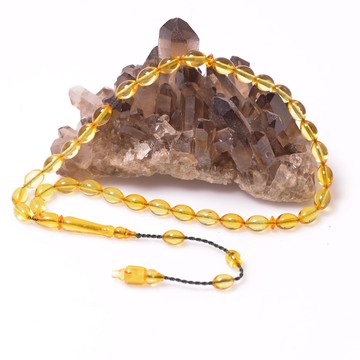
Drop amber prayer beads (tasbih) are made of beads thought to be of natural resin origin and shaped over time into prayer beads. The most striking trait of these beads is their light weight, and when held in the hand for a long time, they are known to take on body heat quickly and create a feeling of warmth. Showing a very slight static charge when rubbed is regarded as an important trait associated with structures considered natural. Compared with pressed or synthetic material, there may be clear differences in density and surface texture. In samples considered natural, small ripples, traces resembling air bubbles, or a natural flow pattern in the inner structure stand out, rather than uniformity. Visually, a semi-transparent look under light and a sense of depth are seen as desirable traits. As use continues, slow changes in surface shine and tone may also appear through skin contact and environmental factors. For this reason, drop amber prayer beads are products evaluated as a whole, not only for their aesthetics but also for their physical reactions.
How to Identify a Drop Amber Necklace
A drop amber necklace is made of pieces thought to be of natural resin origin and worked into jewelry. One of the most striking traits of these necklaces is a semi-transparent look, and when viewed under light, it is regarded as creating a sense of depth. Small irregularities resembling natural flow marks on the surface, instead of a completely flawless and industrial look, are considered a more characteristic trait. This is seen as an important sign for telling it apart from artificial production. As use goes on, slow changes in color tone may appear through skin contact, ambient light, and natural oxidation, and this change tends toward warmer and darker tones. In terms of weight, it is regarded as feeling lighter than glass or plastic-like materials, and this lightness is seen as adding to wearing comfort. In samples considered natural, small air bubbles or organic traces may be seen in the inner structure, and these details are linked with the natural formation process of the necklace.
How to Find Drop Amber
Drop amber is a material regarded as having formed historically when resin that seeped from trees in ancient forests fossilized over long geological processes. In this process, the resin is thought to undergo chemical change underground under the influence of oxygen, pressure, and heat, harden, and over time turn into a semi-transparent structure. Today it is known to be found mainly in the Baltic region and in some other fossil deposits, and these regions are cited among the richest areas for amber formation. It is also regarded as occurring in sea and coastal areas, as small pieces carried by waves and washed up on beaches. Examination of geological layers and the extraction methods used in digs are among the important factors supporting the view that this material forms through natural processes. Because its formation takes millions of years, it is seen as a rare material, and this is regarded as a factor that raises its perceived value, both in terms of natural history and aesthetic use.
How Do Drop Amber Prayer Beads Change Color?
Drop amber beads are regarded as able to change color tone over time during use. This change is linked with factors such as skin contact, ambient temperature, and exposure to sunlight. Pieces that start with lighter, nearly transparent tones may shift toward darker, warmer, and deeper tones as use goes on. This is thought to be connected to natural oxidation and is regarded as a trait specific to the organic structure of the material. With regular use in particular, the surface is also regarded as able to take on a more lively and shiny look over time. The color change can also serve as a trace of the product's past use, and in this way each piece gains its own character over time. For this reason, the differences in tone seen in drop amber beads are read as the result of natural processes and are linked with the material changing over time like a living thing.
How to Identify Genuine Drop Amber
Pieces evaluated as genuine drop amber are among the materials thought to be of natural resin origin and regarded as having reached today by fossilizing over long geological processes. One of the most striking traits of this kind of piece is a sense of lightness, owing to its low-density structure. Compared with glass or plastic-like materials, it is known to give a warmer, softer, and more natural feel to the touch. When examined under light, the surface giving a sense of inner depth and the inner structure showing ripples resembling natural flow marks are evaluated as important traits. Pieces that are completely uniform, overly flawless, and factory-looking are not associated with samples considered natural. In some samples, a very faint resinous smell is observed when the piece warms in the hand during use, and this is regarded as one of the traits associated with a natural structure. Surface shine and tone are thought to change slowly over time depending on contact, environmental factors, and intensity of use. Taken together, these traits show that genuine drop amber is interpreted not only visually but also through physical and sensory reactions.
How to Identify Baltic Drop Amber
Types of amber known to be extracted from the Baltic region are evaluated among the natural formations defined by a high degree of purity and distinct color transitions. These pieces are mostly seen in yellow, honey, and light brown tones, and they are regarded as showing a semi-transparent look when they interact with light. In Baltic amber considered natural, light transmission is clear, and the inner structure is thought to possibly contain small air bubbles or organic traces. These details are linked with the resin being trapped under natural conditions during the formation process. Over time, with environmental factors, contact, and oxidation, it is known to tend toward a darker color tone. The surface texture is slightly wavy and resembles natural flow marks, rather than being completely flawless. Taken together, these traits show that Baltic amber is regarded as a characteristic material that carries the marks of natural processes as well as an attractive look.
How to Identify Beirut Drop Amber
Pieces called Beirut drop amber are among the types of amber known commercially in the Middle East and evaluated with different processing techniques. In this kind of product, the range of colors may be wider, and dark tones are often seen. In samples considered natural, slight transparency and light transmission are present. A quick rise in the feeling of warmth when held in the hand is one of the traits that stand out. Natural flow marks and small inner cracks may be seen on the surface.
How Does Drop Amber Turn Red?
Drop amber changing color over time and turning into darker, reddish tones is regarded as a natural effect of use. It is associated with exposure to sunlight, contact with skin, and oxidation. Pieces that start out light yellow or honey-colored may take on warmer, darker tones with long-term use. This change is accepted as natural aging and is considered one of the material's inherent characteristics.
How Is Drop Amber Formed?
The formation of drop amber is regarded as a process that began millions of years ago, when resin seeping from trees hardened over time in soil and natural conditions. Under the influence of oxygen, pressure, and heat, this resin underwent chemical change and fossilized. The result is a hard, semi-transparent, lightweight material. Plant remains or traces of insects are thought to be found in some specimens. For this reason, it is seen as an important material in terms of natural history.
How Is Drop Amber Made?
Some products sold as drop amber may be made from processed resin rather than forming entirely naturally. In this process, substances similar to natural resin are shaped into beads under specific heat and pressure. Polishing and cutting are then applied to give them an attractive look. However, there are thought to be structural differences between amber regarded as natural and processed products. The internal texture of natural pieces is more organic and irregular, while processed ones may show a more uniform structure.
What Is Drop Amber and How Can You Identify It?
Drop amber is a semi-precious material thought to originate from fossilized natural resin, and it is used to make jewelry and accessories. The most important features for telling these materials apart include light weight, translucency, and a natural surface texture. A change in color tone over time with use is another feature people look for. Small bubbles or natural marks inside the piece are also accepted as part of the evaluation criteria.
How Do You Care for Drop Amber Prayer Beads?
Drop amber prayer beads are thought to need regular care to last a long time. It is recommended to keep these items away from direct contact with chemicals. Wiping them with a soft cloth and keeping them away from very hot places is important. Not leaving them in sunlight for long periods is among the recommended care methods. Contact with the natural oils of the hand during use may contribute to a light sheen on the surface.
How Are Drop Amber Prayer Beads Made?
Making drop amber prayer beads involves cutting natural or processed amber pieces to specific sizes, drilling holes in them, and stringing them on cord. The beads are prepared in equal sizes and their surfaces are polished. They are then joined with a durable cord or monofilament. In the final stage, a tassel and spacers are added to complete the piece. In this process, visual harmony and comfort in the hand are considered important criteria.
How Can You Tell If Drop Amber Is Genuine?
Drop amber is regarded as genuine when the features of its natural structure are found together. Features such as light weight, a quick response to heat, and a sense of depth under light stand out. A change of color over time is also considered an important sign. Such changes are thought not to occur in synthetic materials. A surface texture that is not completely flawless is also an important criterion for a natural structure.
How Can You Identify Fossil Drop Amber?
In drop amber specimens that contain fossils, the presence of plant or insect remains inside the piece stands out. These formations come about when living things or plant parts trapped in the resin during natural formation are preserved over time. When viewed under light, these remains can be clearly seen. This feature leads the material to be regarded as more valuable in terms of natural history. Instead of a completely uniform look inside, natural marks are expected.