




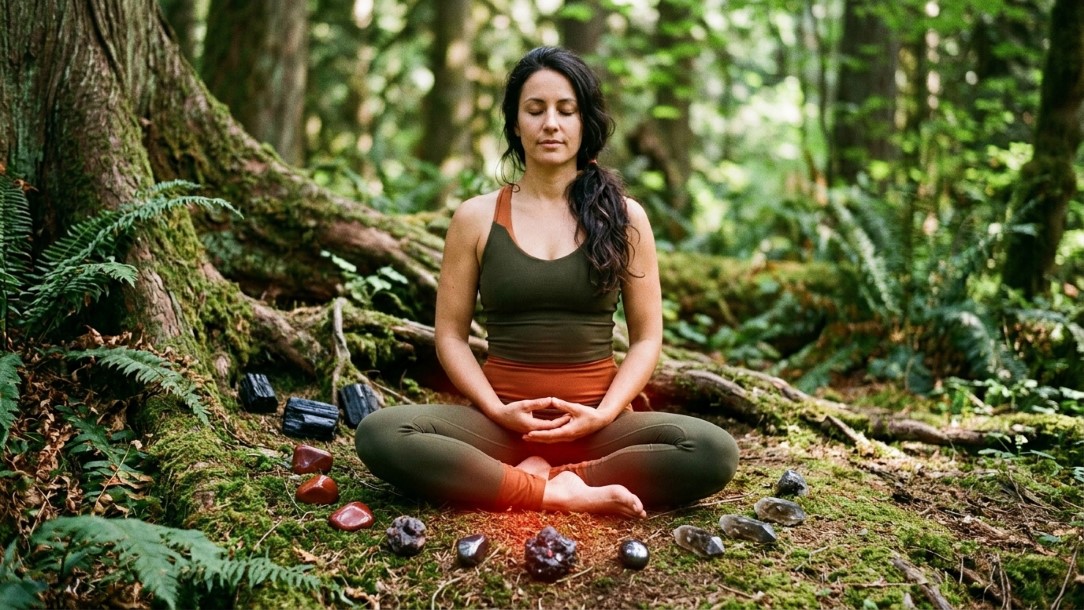
How to Open the Root Chakra
The chakra at the base of the body is regarded as a foundation point in energy work. It is usually associated with security, the sense of survival, belonging, and a connection to life. A balanced root chakra is thought to help a person feel calmer, safer, and steadier, both mentally and emotionally. When people ask how to open the root chakra, the key point is usually described as building an inner balance that supports a stable, secure feeling. Meditation, breathing practice, time in nature, quiet time alone, and grounding exercises are the most common methods. Routines that build body awareness are also thought to strengthen this balance. Natural stones in red and earthy tones are believed to support this energy center as well. Agate and hematite in particular are considered compatible with the root chakra, and some traditions hold that they may help a person develop a more centered, balanced, and stronger inner stance.
Related reading: What is the sacral chakra?
How Do We Know the Root Chakra Is Opening?
How do we know the root chakra is opening? With shifts in energy balance, a person is thought to feel calmer, safer, and steadier. In daily life, people may notice that they stay more even under stress, react less suddenly, feel more mental calm, and sense a more distinct inner peace. Feeling more "grounded" is also linked to this change. That means a stronger, steadier sense of being in the body. Other commonly described experiences include clearer decisions, less needless worry, and a stronger wish to build a more orderly life. In some approaches, a more secure stance toward life, less excessive worry about the future, and more ease about basic needs are also seen as part of this shift in balance. All of this is understood as a general sense of inner awareness and energy change, not as something that can be measured precisely.
Root Chakra Opening Methods
Root chakra opening methods are made up of various practices that support balance of body and mind. Their main aim is described as helping a person feel safer, steadier, and more centered. Meditation is one of the most common of these methods. Focusing on the breath, calming the mind in a quiet place, and raising body awareness are thought to strengthen the sense of balance associated with the root chakra. Breathing exercises are used to calm the body in stressful moments and to reduce mental clutter. When practiced regularly, they are believed to increase a person's sense of inner control. Contact with nature also holds an important place in root chakra work, because direct contact with the earth is believed to strengthen the feeling of being "grounded." Walking barefoot, spending time outdoors, or being in natural spaces are seen as part of this process. Building a regular daily routine, cutting back on needless sources of stress, and adopting a simpler lifestyle are also among the factors thought to help balance this energy center. Some traditions believe that natural stones, especially red and dark-toned ones, can support this process. Some views also hold that this natural stone may help a person build a steadier, calmer, and more balanced energy field.
Signs of a Blocked Root Chakra
Signs of a blocked root chakra refer to experiences that are linked to weakened energy balance and thought to bring changes in both psychology and behavior. The most commonly mentioned effects include a constant feeling of insecurity, a dominant thought that "something bad will happen," excessive worry about the future, and a growing need for control. A person may feel more vulnerable to life and struggle even with the simplest decisions. This is believed to be connected to the root chakra's basic role, which is a sense of trust and stability. Emotionally, sudden bursts of anger, restlessness, a feeling of being stuck inside, and waves of anxiety with no clear cause may appear. In some approaches, feeling unable to stay put or "cut off from the earth" may accompany this picture. On the physical side, people describe heaviness in the lower body, tired legs, low overall energy, and constant exhaustion. Disrupted sleep, not feeling rested, and difficulty waking up in the morning are also associated with root chakra imbalance. In social life, a person may become more withdrawn, have trouble trusting, keep distance from others, and find it hard to express themselves. None of these signs is treated as a medical condition. They are understood as a possible imbalance in the energy system and a weakened sense of grounding.
Opening the Root Chakra
Opening the root chakra covers practices that aim to bring a person's energy center into better balance. This approach treats mental calm, body awareness, and emotional balance together, with the aim of making a person's overall life energy steadier. Regular practice is thought to help a person feel safer, more centered, and more resilient against outside influences. Meditation holds an important place among these practices. Focusing on the breath, observing thoughts, and slowing the mind are believed to raise inner awareness. Breathing work is seen as a tool that may help reduce the body's stress response, and when practiced regularly it is thought to support a calmer state of mind. Contact with nature is another key part of the process, because natural settings are believed to strengthen the feeling of being grounded and ease mental load. Spending time outdoors, touching the earth, or being in quiet natural places all belong to this approach. Some natural stones, especially the red, brown, and dark-toned ones linked to the root chakra, are also believed to play a supportive role. Some assessments suggest these stones may help a person build a more balanced, steady, and stronger inner structure.
Why Does the Root Chakra Get Blocked?
Why does the root chakra get blocked? It is usually associated with stress, a sense of insecurity, intense anxiety, and an unsettled way of life. Not feeling safe is thought to be able to cause an imbalance in this energy area. Past experiences and constant mental pressure may also play a part. These influences can leave a person feeling more restless and indecisive.
Root Chakra Problems
Root chakra problems are associated with difficulty in a person's sense of security and inner balance in daily life. Restlessness, indecision, and a constant state of worry may appear. Low motivation and trouble focusing may also show up. These states are thought to be linked to changes in energy balance.
Root Chakra Activation
Root chakra activation refers to practices that support a more balanced working of this energy center. Meditation, breathing techniques, and grounding exercises are among the most commonly used methods. These practices are thought to help a person feel stronger and more balanced. Some natural stones are also believed to be supportive in this process.
Root Chakra Opening Meditation
Root chakra opening meditation is a practice that aims to calm the mind and support the balance between body and energy. These meditations usually focus on the breath and try to raise body awareness. When practiced regularly, they are thought to help a person feel more peaceful and centered. A sense of grounding is regarded as one of the core effects of this process.
Root Chakra Balancing
Root chakra balancing covers practices that aim to make the flow of energy more even. Meditation, nature walks, and breathing work are often used in this process. They are thought to help a person feel steadier and safer. Organizing daily habits is also seen as part of the process.
Root Chakra Natural Stones
Root chakra natural stones are stones thought to support a person's sense of grounding in energy work. They are believed to influence trust, balance, and connection to life. Agate, hematite, and obsidian are considered compatible with the root chakra. Agate is believed to support calm and emotional balance, hematite is thought to sharpen mental focus and create a more centered feeling, and obsidian is associated with a protective energy that strengthens inner awareness. These stones are often red, brown, or dark in tone, and this is why they are linked to the root chakra: their color ties them to the earth element. For this reason, using them in meditation, in daily wear, or simply carrying them is thought to help a person feel more balanced, calm, and secure.
Root Chakra Healing
The root chakra healing process covers practices that aim to bring the energy balance back into order. Meditation, breathing work, and contact with nature are among the most commonly used methods. They are thought to help a person feel more balanced, secure, and calm. Simplifying daily life and reducing sources of stress may also support this process.
Where Is the Root Chakra Located?
The root chakra is an energy center believed to sit in the lower part of the body, near the base of the spine. This area is thought to be tied to a sense of security and the survival instinct. In energy work it is also described as the "grounding point" and is associated with physical balance.
An Overactive Root Chakra
An overactive root chakra is interpreted as an excessive concentration in the energy balance. In this state, the need for control may grow, and a person may tend toward a more rigid way of thinking. Less flexibility, a constant state of alertness, and difficulty relaxing may be observed.
Agate and the Root Chakra
Agate is considered one of the natural stones associated with the root chakra. It is thought to support a sense of grounding and help a person feel more balanced. Its red and brown tones in particular are seen as more compatible with the root chakra, and it is often chosen for energy work.
Hematite and Root Chakra Work
Hematite and root chakra work is one of the approaches used in practices focused on grounding and balance. Hematite is believed to support mental calm and a centered feeling. It is thought to help gather scattered thoughts.
Root Chakra Activation and Precious Stones
Root chakra activation with precious stones refers to stones thought to support this energy center. Stones such as agate, hematite, and obsidian are often considered in this group. These stones are believed to help a person feel more balanced and secure. They are used as supportive tools in energy work.
Root Chakra Stones
Root chakra stones are the natural stones associated with the root chakra. The best-known ones include agate, hematite, and obsidian. These stones are thought to strengthen a sense of grounding and support energy balance. They are often chosen for meditation and energy work.
Frequently Asked Questions About Opening the Root Chakra
What is the root chakra?
The root chakra is regarded as one of the most basic centers in the energy system. It is usually associated with a sense of security, the survival instinct, and connection to life. This energy area is thought to represent a person's bond with the physical world. A balanced root chakra is believed to help a person feel calmer, safer, and steadier. When it is out of balance, a person is thought to feel anxiety, insecurity, and indecision more intensely.
Why is the root chakra important?
The root chakra is considered very important because it is linked to a person's basic life energy. A balanced root chakra is thought to help a person feel safer and develop a steadier stance in life. Coping with stress, decision making, and emotional resilience are all seen as areas related to the root chakra. For this reason, it is viewed as one of the first centers to be balanced in energy work.
How do you balance the root chakra?
Meditation, breathing work, and contact with nature are among the most commonly used methods for balancing the root chakra. Grounding exercises are thought to play an important role. Organizing a daily routine, adopting a simpler lifestyle, and reducing sources of stress are also seen as supportive. Some approaches believe that natural stones can strengthen this balance as well.
What happens when the root chakra opens?
When the root chakra opens, a person is thought to feel calmer, more balanced, and safer. Less mental clutter, more controlled reactions under stress, and a growing sense of inner peace may be observed. A person may also feel a stronger wish to build a more orderly life and tend to make clearer decisions. These changes are understood as a transformation in energy balance, not as definite results.
Why does the root chakra get blocked?
A blocked root chakra is usually associated with stress, a sense of insecurity, traumatic experiences, and an unsettled way of life. Not feeling safe is thought to be able to cause an imbalance in this energy area. Constant anxiety, mental pressure, and a feeling of uncertainty may also play a part. This blockage is believed to weaken a person's overall energy flow.
Which natural stones are used for the root chakra?
The natural stones associated with the root chakra include agate, hematite, and obsidian. These stones are thought to support a sense of grounding and help a person feel more balanced. Red and dark-toned stones in particular are considered more compatible with the root chakra. These stones are believed to play a supportive role in energy work.
How is agate associated with the root chakra?
Agate is considered one of the natural stones most often associated with the root chakra. It is thought to strengthen a sense of inner balance and create a calmer state of mind. Its red and brown tones are seen as more compatible with the root chakra. Agate is believed to offer supportive energy during stressful times.
How is hematite viewed in relation to the root chakra?
Hematite is seen among the stones that strengthen a sense of grounding because of its dense structure. It is thought to reduce mental scatter and help build a more centered way of thinking. It is believed to play a balancing role, especially during stressful times. It is one of the stones often chosen for root chakra work.
How do you do a root chakra meditation?
Root chakra meditation is a practice that aims to calm the mind and raise body awareness. You sit in a quiet place, focus on your breath, and direct your attention to the lower part of the body. This process is thought to help a person feel safer and more balanced. With regular practice, inner awareness is believed to grow.
What is the relationship between grounding and the root chakra?
Grounding is understood as a person making their energy steadier, and it is directly associated with the root chakra. Spending time in nature, touching the earth barefoot, and doing breathing exercises may support this process. It is thought to help a person feel calmer, more balanced, and safer. For this reason, grounding holds an important place in root chakra work.