How to Polish a Silver Ring
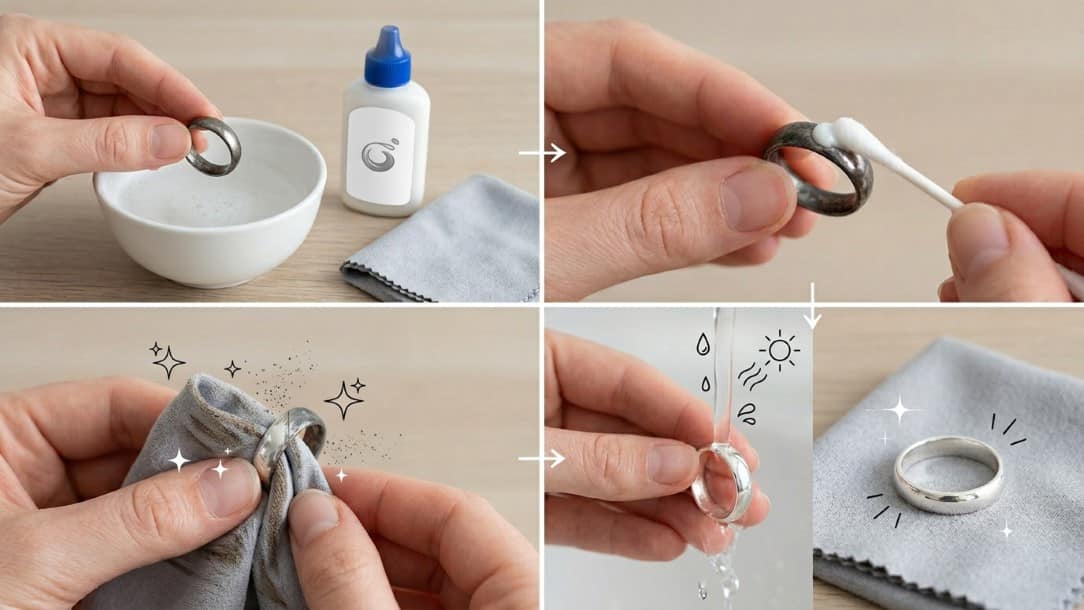
Over time, a silver ring can naturally turn dull or tarnish because of air, humidity and daily wear. This is a normal process that comes from the chemistry of silver. Sulfur compounds in the air form a thin layer of oxide on the surface, which lowers the ring's shine and gives it a darker look. Before you start polishing, it is therefore very important to carefully clean off the dust, oil and dirt that build up on the surface. Warm water and mild soap are among the safest ways to do this, since they do not harm the surface and soften everyday dirt so it comes off easily. While cleaning, stay away from hard brushes, abrasive sponges and strong chemical products. These can leave micro scratches on silver and permanently reduce its shine over time. Regular care matters even more for men's silver rings, where tarnishing from frequent wear can be more noticeable. In the same way, contact with perfume and cosmetics can speed up tarnishing on women's silver rings. Designs with natural stones can have delicate stones, so gentler cleaning methods are preferred. With correct and regular care, a silver ring keeps its natural shine, tarnishes more slowly and stays attractive for a long time.
How to Polish a Tarnished Silver Ring
Tarnish is a natural layer of oxide that forms when silver reacts with oxygen and, above all, with sulfur compounds in the air. Over time this layer lowers the ring's shine and makes it look darker. Light tarnish can be removed with simple home methods. One of the most common is a mix of baking soda and water. Mix it into a soft paste, apply it to the surface with gentle motions, then rinse carefully with plenty of water. For heavier tarnish, the aluminum foil and hot water method can be used. It aims to dissolve the tarnish layer through a chemical reaction, but keep the soaking time short and check the ring as it sits. Take extra care with rings that have stones or a delicate structure, because some stones can be affected by these treatments and the surface can be damaged. Keep these points in mind when you apply any method:
- Do not press hard on the surface when applying the baking soda paste
- Use the aluminum foil method for a short time and check the ring constantly
- Be careful with chemicals and hot water on rings with stones
- Always rinse the ring with plenty of water afterward
- After cleaning, dry it completely with a soft cloth
How to Polish Tarnished Silver Rings
For more noticeable tarnish, you can use special silver cleaning products. These products dissolve the oxide layer on the surface and help bring back a brighter look. It is important to dry the ring completely after cleaning, because leftover moisture can speed up tarnishing again.
Storage matters too. Silver jewelry kept in airtight, dry, closed boxes can hold its shine for longer.
How to Polish a Silver Ring at Home
One of the most practical home methods is cleaning with warm soapy water. Gently wipe the ring with a soft cloth, then rinse and dry it. This can be enough to remove everyday dirt.
Toothpaste can also be used in some cases, but choose a mild, non-abrasive one. Do not scrub hard, because this can leave fine scratches on the surface.
How to Polish a Silver Solitaire Ring
With stone rings, the metal and the stone both need protection. Harsh cleaners with chemical ingredients are therefore not recommended. Cleaning with warm water and a soft cloth is considered safe.
It is important to dry the ring completely after cleaning. Leftover moisture can dull both the stone and the metal over time. Some stones can also be sensitive to water, depending on their type.
How to Polish the Color of a Silver Ring
The natural color of silver can turn matte over time. Regular care can reduce this to a large extent. Silver polishing cloths remove light tarnish from the surface and help bring back the shine.
Limiting contact with perfume, cream and chemicals also helps keep the color. Over time, these substances can change the surface.
How to Polish a Silver Necklace and Ring
When you wear silver jewelry such as a necklace and a ring together, both can dull at the same time. This mostly comes from contact with air and from the natural oils on your skin during daily wear. When cleaning, use the same method for both pieces, but treat them separately. A mix of warm water and mild soap is enough to start softening the dirt on the surface.
After cleaning, dry the pieces with a soft cloth. With chain necklaces in particular, make sure all the water is removed, because moisture can stay in the small links and increase tarnishing over time.
How to Polish a Ring That Is Not Silver
For rings that are not silver, the type of material directly affects the polishing method. Stainless steel, brass and plated materials each need different care. Avoid abrasive chemicals on these rings, because the plating can be damaged.
In general, mild soapy water and a soft cloth are considered a safe method. Do not rub plated surfaces hard, or the color may change or the plating may peel. Treat each material according to its own structure.
How to Polish a Silver Ring at Home
Home care, when repeated regularly, can give very good results. Even wiping the ring with a dry cloth after daily wear helps keep its shine in the long run. For a deeper clean, you can use a mix of warm water and mild soap.
The most important point at home is not to harm the ring's structure. Choose soft-textured cloths instead of abrasive sponges or hard brushes. Regular care can reduce the need for professional cleaning.
Polishing a Silver Ring at Home
One of the most common methods for polishing at home is a baking soda mix. Mixed into a soft paste, the baking soda is applied gently to the surface and left for a short time. Then rinse with plenty of water and dry the ring completely.
In some cases, natural lemon juice can also be used, but this method is not suitable for long contact. Short applications are considered safer. Care at regular intervals helps the ring look livelier.
How to Clean and Polish a Silver Ring
When cleaning and polishing are considered together, the first step is always to clear the surface. Polishing without removing the layer of everyday dirt and oil may not give enough of a result. So first clean the surface with mild soapy water.
Then polish with a cloth or care product suited to silver. Avoid pressing too hard at this stage, because the surface can be delicate. Regular cleaning helps keep the shine.
How to Polish a Silver Ring with Stones
With stone rings, the most important thing is to protect the structure of the stone. Some natural stones are thought to be sensitive to water or chemicals, so careful cleaning is recommended. Clean only the metal part and keep the stone area drier.
A soft cloth is one of the safest options for these rings. Make sure the ring dries completely after cleaning. Damp environments can harm both the metal and the stone surface.
Natural Methods for Polishing a Silver Ring
Among natural methods, ingredients such as baking soda, vinegar and lemon are often chosen. These work because they are mildly acidic or have cleaning properties. However, these substances are not suitable for long-term use and should be applied with care.
The most important point with natural methods is not to harm the ring's structure. Short applications followed by a rinse with plenty of water are recommended. It is considered better to use these methods only when needed, not on a regular schedule.
Frequently Asked Questions About Polishing a Silver Ring
Why does a silver ring tarnish?
Over time, silver rings tarnish because of sulfur compounds in the air, humidity, and the sweat, perfume and cosmetics they touch during daily wear. This is an oxidation process that comes from the natural structure of silver. The thin layer that forms on the surface leads to a darker look over time.
How can you prevent a silver ring from tarnishing?
It is not possible to stop tarnishing completely, but you can slow it down. Keep the ring away from chemicals, take it off in the shower or while cleaning, and do not leave it in damp places. Storing it in a closed, dry place when not in use also gives important protection.
How can you clean a silver ring at home?
The most common home method is warm water and mild soap. Soak the ring in this water for a short time, then gently wipe it with a soft cloth. For heavier dirt, you can use water mixed with baking soda, but avoid hard rubbing so you do not harm the surface.
Can you use toothpaste to polish a silver ring?
Toothpaste can work in some cases, but it must be used with care. Products with abrasive ingredients can scratch the surface. Choose a very mild toothpaste and use it without pressing hard.
What should you watch for when cleaning a silver ring with stones?
With stone rings, the structure of the stone matters a lot. Some natural stones are thought to be sensitive to water and chemicals. Instead of soaking the ring for a long time, it is safer to wipe it with a damp cloth. Dry it completely after cleaning.
Why does a silver ring tarnish quickly again?
Quick tarnishing after cleaning comes from environmental factors. Perfume, sweat, humidity and air pollution can cause the surface to oxidize again. A ring that is not dried well can also tarnish faster.
What is the safest way to clean a silver ring?
The safest method is warm water and mild soap. It removes dirt without harming the surface. Wiping gently with a soft cloth prevents scratches and gives good results with regular use.
How often should you polish a silver ring?
It depends on how much you wear it. Rings worn daily may need care more often, while rings worn less can go longer between cleanings. Regular light cleaning is better than constant strong polishing.
Does the way you store a silver ring matter?
Yes, it matters a lot. Silver rings tarnish faster the more they touch air and moisture. Store them in dry, closed boxes, and keep them from touching other metals.
Can you polish a silver ring with natural methods?
Natural methods such as baking soda and lemon can work for short-term use. They need careful application, and you must always rinse afterward. Continuous use is not recommended.