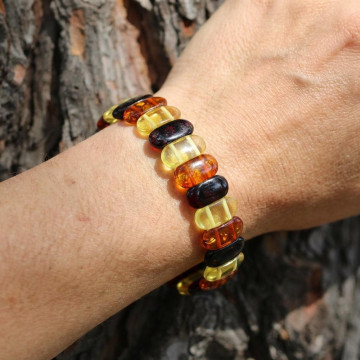
How can you tell if a stone is natural? If you are wondering, know that the methods you can try on your own are not conclusive. The only sure way to know whether a stone is natural, valuable, and original is to have it examined in a laboratory.
People trained in gemology evaluate stones against a range of criteria and certify them. This way, pure natural stone is easily told apart from artificial or synthetic stone. So how do you know whether a stone you found somewhere or bought in a shop is natural? In the rest of this article, we share some tips on that.
How Can You Tell If a Natural Stone Is Real?
If you are buying a stone for the first time or adding new pieces to your collection, you should be careful. Buying stones is not something to rush, and the seller and the reliability of the product should always be questioned. First of all, your feelings directly affect your choice of natural stone. The crystal that feels closest to you may be the right one for you.
You can base your choice on a stone whose look appeals to you, or one you believe may support your physical or spiritual well-being. You can also take your birth chart into account to reinforce your strengths and balance what you feel is missing. Once you have settled on a stone, pay attention to the quality of the product and the reputation of the place you buy from.
Taş Sandığı, which has a well-earned name in this field, meets all expectations. With its rich selection of products, Taş Sandığı speaks to natural stone needs, and its colorful collection always has something that suits you. How can you tell if a natural stone is original? If you are curious, you can browse our website for detailed information, or keep reading this article for a short overview.
How Do You Test Whether a Natural Stone Is Genuine?
Although they cannot give fully accurate results, there are some methods you can try yourself. We can list them as follows:
- Look for the stone's flaws:
Natural stones are by nature not flawless, and they have bubbles and cracks on their surfaces. Fake stones do not contain such details and stand out for having very few flaws. You can go over your stone with a magnifying glass and look at the flaws on it, which gives you an idea of whether it is genuine.
- Pay attention to the stone's color:
How can you tell if a natural stone is real? If you are wondering, remember that looking at the color of the stone is an important step in the authenticity test. Pure crystals look more striking than fake or synthetic stones. Natural crystals with a vivid, bright texture show their unique, natural design when held up to the light. Natural stones that reflect light strongly and densely can be recognized by this feature.
- Expose it to heat:
Keep in mind that this can damage stones and accessories. Be very careful when you apply heat.
A synthetic stone melts or its dye runs when heated. This answers the question of how to tell natural stones apart.
- Ask for a certificate:
How can you tell if a stone is pure natural stone? Find out whether there is a valid certificate that answers your question. By asking the place you are buying the stone from for this document, you can shop with peace of mind.
Does Natural Stone Burn?
Fake stones have a low melting point. Natural stones, on the other hand, withstand high temperatures. For this reason, we can say that natural stones will not melt or burn. However, they can also deform and change color if exposed to extreme heat.
Why Does Natural Stone Warm Up?
All natural stones are believed to absorb negativity from their surroundings. Each natural stone is also said to have its own energy, vibrations, and frequency.
According to this belief, the energy in a natural stone is said to merge with the energy of the person carrying it. The crystal is thought to draw in the energy of the body or space it is in and turn negative energies into positive ones. As a result, a feeling of relaxation is said to arise and the flow of energy is said to be balanced. This is what is believed to make natural stones warm up. On the other hand, leaving crystals in the sun for a long time also makes them warm up. (Exposing stones to sunlight is a common way to cleanse them, and it is considered a safe method.)
How Can You Tell Natural Stones Apart by Type?
All stones contain different minerals in their structure. Properties such as hardness and refractive index also set them apart from one another. For this reason, the authenticity tests that can be applied may vary from stone to stone.
Here are a few examples:
1. How Can You Tell Moonstone?
Fakes of this stone are mostly made from opalite. You can make this distinction by examining the layers of the stone.
In opalite, bubbles stand out more than layers. Genuine moonstone, on the other hand, stands out for its layered structure.
This stone also has a glow of its own. Under light it dazzles with a near-white or light blue shimmer. If this reflection appears in a variety of colors, it points to a fake stone.
Moonstone also stands out for being harder than glass and opalite. It leaves a cool feeling when it touches the skin. These can all be used as important tips for judging the authenticity of the stone.
2. How Can You Tell Rose Quartz?
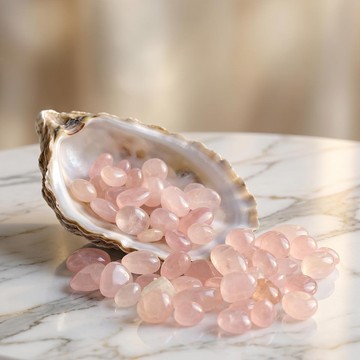
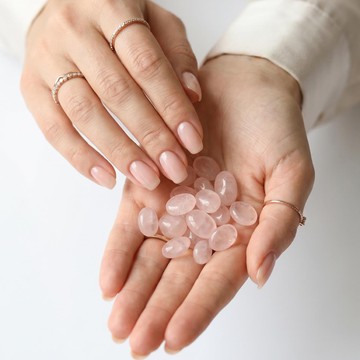
Natural rose quartz is told apart from fakes by its soft, pale tones. If your crystal has very vivid or overly dark tones, this suggests it is fake.
This stone also gives a heavy, dense feel. Fake stones feel light.
As with amethyst, rose quartz does not contain bubbles. If you notice bubble-like formations in your stone, it is most likely not real.
3. How Can You Tell Amethyst?
If you are going for amethyst, you can find an answer to how to tell pure natural stone here:
- Pay attention to the color. Genuine amethyst looks striking with its violet and purple color. More precisely, it shows different shades of these colors together. When held up to sunlight, it reflects different colors.
- Most natural stones contain bubbles because of the processes they went through while forming. However, this does not apply to amethyst, which belongs to the quartz group. If you see bubbles when you look through a magnifying glass, the stone is probably fake.
- Amethyst crystals that are not genuine are made by injecting colored dyes into the cracks on them. You can examine the cracks of the stone closely and check whether there are traces of dye.
Conclusion: How Can You Tell If a Natural Stone Is Original? A General Assessment:
The methods above can give you a hint about whether a stone is genuine. Still, we want to remind you that the most reliable way to find out is to put the stone through laboratory tests. Whether a stone is natural or synthetic, and what properties it has, becomes clear through a gemologist's examination.
If you do not want to leave it to chance, you can rely on Taş Sandığı's range of certified products. How can you tell if a stone is pure natural stone? Our store ends that question with a trustworthy, distinctive shopping experience. With prices that suit your budget and unique designs that suit your style, Taş Sandığı shows its consistently high quality in every product.