




How Can You Tell if Amber Is Real?
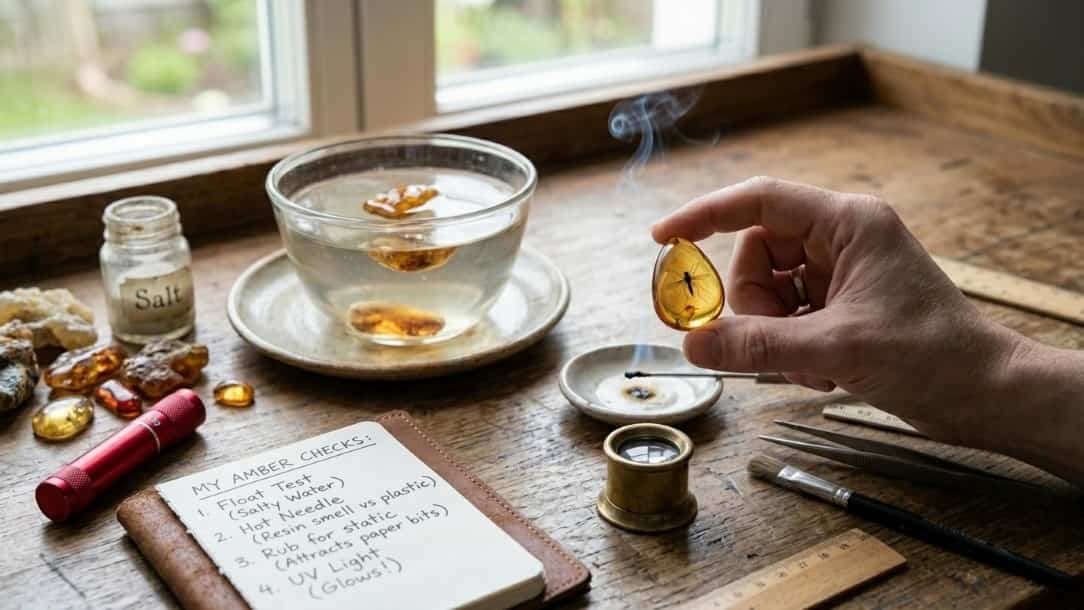
How can you tell if amber is real? The question covers the observation and inspection methods used to separate amber, which is believed to be a natural resin, from fake and synthetic versions. Because amber stone is thought to form over millions of years through natural processes, each piece is believed to have its own characteristics. For that reason, it is generally accepted that several physical traits should be examined together instead of relying on a single sign. Light transmission, surface texture, and the way a piece reacts during wear are among the traits most often considered. Natural amber is known to contain small air bubbles, line-like patterns, or natural inclusions rather than being completely flawless. This is thought to be linked to its long, natural formation. Many people also observe that it feels slightly warm in the hand and can produce static electricity when rubbed. Synthetic or imitation pieces, on the other hand, are said to look more uniform, overly smooth, and artificial. So when judging amber, it is worth looking beyond appearance to how it responds to light, how it feels to the touch, and how it behaves over time.
How Can You Tell if Amber Prayer Beads Are Real?
How can you tell if amber prayer beads (tasbih) are real? The question covers the observations used to work out whether the material in a set of prayer beads is natural. Prayer beads thought to be made of natural amber are said to feel slightly warm in the hand and may show a static electricity effect when rubbed. Small air bubbles or natural marks inside the beads are also regarded as characteristic of this kind of piece. Beads that look very uniform and flawless, by contrast, are thought to be synthetic more often than not.
Amber prayer beads are recognized first by their natural look, light weight, warm feel in the hand, and distinctive texture. Real amber is usually not cold and heavy like glass or plastic. It warms up quickly in the palm, and when the beads are rubbed together they can give off a faint, resinous, pine-like scent. In color, amber can range from honey yellow to cognac, lemon, cherry, milky, or moire tones, but colors that look overly glossy, flawless, or artificial should always be examined with care. Natural amber may contain small air bubbles, veins, natural color transitions, or differences between matte and glossy areas. These flaws are actually signs that support its authenticity. Real amber is lighter than plastic imitations, feels soft and warm in the hand, and when struck against glass makes a duller, softer sound rather than a sharp one. Other signs include color changes over time, a brighter shine with use, and a livelier look from the oils on your hands. Even so, pressed amber, fire amber, compressed amber, and plastic imitations are common on the market, so judging by eye alone is not always enough. The most reliable approach is to show the prayer beads to an experienced craftsman or a trusted amber seller. If you are buying an expensive set, consider the seller's reliability, the history of the piece, the craftsmanship, how well the imame (the lead bead) matches the other beads, the quality of the lathe work, and, if available, certification.
How Can You Tell if Amber Is Genuine?
How can you tell if amber is genuine? This is an inspection process for judging whether amber products, whatever their use, are natural. Natural amber is believed to look translucent under light and to show shifts in color tone when viewed from different angles. Some types are known to float in salt water, but this method is thought not to give a definite result for every type. For that reason, it is generally accepted that several observation methods should be used together instead of a single test.
Looking only at color or shine is not enough to tell whether amber is real, because today there are very convincing imitations made from plastic, glass, resin, and pressed materials. Real amber is fossilized tree resin, so it usually feels light, warm, and soft in the hand. It is not cold and heavy like glass, or artificial and slippery like plastic. A bead or object warms up quickly in the palm, and when lightly rubbed against a surface it can sometimes give off a natural scent reminiscent of pine resin. Natural amber may contain small air bubbles, color transitions, veins, tiny marks, or organic-looking details, so pieces that are completely flawless, uniform, and overly glossy deserve a closer look. Folk methods such as the salt water test, the rubbing test, or the heat test are well known, but they can damage the piece or fail to give a definite result. Avoid methods such as burning with a needle, heating, or using chemicals in particular, because real amber can be damaged by these treatments too. The soundest assessment weighs the piece's weight, texture, scent, craftsmanship, age-related color change, and the seller's reliability together. If you are buying valuable amber, asking for a certificate, an expert opinion, or a check by a trusted craftsman is the best approach, since telling real amber from imitations often takes experience.
How Can You Tell if Fire Amber Prayer Beads Are Real?
How can you tell if fire amber prayer beads are real? This is an area of assessment for telling apart fire amber products made with modern production techniques. Fire amber is thought to have a pressed or compressed resin structure, so it is considered to have different properties from natural fossil amber. Color transitions that are more layered and deeper point to a natural look, while pieces with an even, uniform color across the surface are thought to possibly be synthetic.
How Can You Tell if an Amber Necklace Is Real?
How can you tell if an amber necklace is real? This covers the observations used to identify natural material in everyday jewelry. Amber necklaces thought to be natural are believed to show color shifts when viewed from different angles under light and to contain natural marks. Synthetic necklaces, on the other hand, show a smoother and more uniform surface. Their light weight, which means they do not feel heavy over long hours of wear, is also among the known traits.
How Can You Tell Real Amber?
How can you tell real amber? This is a general assessment area that covers all types of amber. Natural amber is thought to show small changes on its surface over time and may be sensitive to chemicals. Its tendency to produce static electricity is also seen as one of the traits that support a natural structure. For that reason, it is known that not only the appearance but also several physical behaviors should be evaluated together.
How Can You Tell Real Fire Amber?
How can you tell real fire amber? This is an inspection process aimed especially at bright, intensely colored types of amber. Fire amber is generally considered to have a processed resin structure, so it is thought to differ from fully natural fossil amber. A balanced color depth and light reflection point to a natural look, while in fake pieces these transitions are thought to look more artificial.
Amber Models
Amber models come in different types depending on how they are used and how they are made. Drop amber, pressed amber, and fire amber are each thought to have their own structural characteristics. Clear differences are believed to exist between these models in color intensity, transparency, and the way they are processed. They are known to be chosen according to aesthetic preference, especially in prayer bead and jewelry making.
Amber Prices
Amber prices are regarded as variable, depending on whether the piece is natural, how it is crafted, and what type of material is used. Natural amber is thought to be more valuable because it is rarer, while pressed and synthetic types are considered more accessible options. Rather than pointing to a single fixed value, it is known that general market conditions influence pricing.
What Is Amber?
What is amber? It refers to a natural material thought to be formed from fossilized tree resin. It is believed to have hardened over millions of years of geological processes into the form we know today. Plant remains, traces of tiny insects, or air bubbles can sometimes be found inside it, and this is regarded as an important sign of its natural origin. It is known to be widely used in jewelry and prayer bead making because of its attractive look and light weight.
How Can You Tell if an Amber Stone Is Real?
How can you tell if an amber stone is real? It is thought that an assessment can be made by looking at light transmission, surface texture, and the physical reactions it shows during use. Natural amber is generally not fully opaque. It shows a translucent structure and can form different tones under light, which is regarded as an important sign. Synthetic pieces may look more uniform and artificial.
How Can You Tell if Amber Is Real?
How can you tell if amber is real? It is accepted that evaluating several observation methods together gives more reliable results. A tendency to produce static electricity, a light feel, and natural marks on the surface are among the traits considered for real amber. However, no single test is thought to give a definite result, so different methods should be used together.
How Can You Tell if Fire Amber Is Real?
How can you tell if fire amber is real? These products are considered to have a processed resin structure and to be shaped with specific production techniques. Deep, layered color transitions and different reflections under light are regarded as important distinguishing traits. Pieces with a flatter, more uniform color are thought to possibly be synthetic.
Frequently Asked Questions About Telling Real Amber
How Can You Tell if an Amber Necklace Is Real?
Real amber necklaces are thought to show natural variation in light transmission and to have small natural marks on the surface rather than a completely flawless finish. A slightly warm feel in the hand during wear and a static electricity effect are traits often mentioned for natural amber. Synthetic pieces are said to look more uniform and artificial. For that reason, both the appearance and the feel of the piece are considered together.
How Can You Tell if an Amber Stone Is Real?
To tell whether an amber stone is real, it is thought that you look at whether it shows a translucent structure under light. Natural stones are said to contain small air bubbles or organic marks. Its reaction to changes in temperature is believed to be linked to its natural resin structure. These observations do not give a definite result on their own, but they can give a general idea.
How Can You Tell Real Ottoman Amber?
The types known as Ottoman amber are thought to be associated with older production techniques. Color transitions that deepen over time and a slight dulling with use are regarded as signs of a natural structure. Traits such as warming in the hand and a change in scent are said to be observable. Craftsmanship details are also known to be an important indicator for these pieces.
How Can You Tell if an Amber Necklace Is Real?
When judging whether amber necklaces are genuine, light transmission and surface structure are considered important. Natural amber is thought to show a slightly wavy look rather than being flawless like glass. A light electrostatic effect after long wear is also counted among its distinguishing traits. These effects are accepted as possibly weaker in synthetic necklaces.
How Can You Tell if Fire Amber Is Real?
Fire amber is thought to be made from processed resin. Colors that shift from the inside out and show different tones under light can point to a natural look. Pieces with a flatter, single-color structure are accepted as possibly made with different production techniques. A warm feel in the hand during use may also be among the traits observed.
Is Amber Real? How to Tell
This phrase is mostly seen as a misspelling or a variation of a search query. Generally, it is accepted that to judge whether amber is real, traits such as light transmission, a sense of density, and surface texture are examined. Natural pieces are thought to show small changes over time, which is believed to point to an organic structure.
How Can You Tell Real Amber: Video
Videos describe traits such as the color change amber shows under light and its static electricity effect. Visual inspection is thought to give a clearer idea than a written description. However, a single video does not provide definite verification, and it is accepted that different sources should be weighed together.
How Can You Tell Real Ottoman Amber?
Color change over time and a different feel in the hand are regarded as signs of a natural structure in products known as Ottoman amber. Small irregularities inside the material are also among the traits considered natural. Craftsmanship details and the history of use are also counted among the important indicators.
How Can You Tell if Pressed Amber Prayer Beads Are Real?
Pressed amber is thought to be made from compressed resin. For that reason, it can show different physical properties from fully natural amber. Warming during use, a faint scent, and a static electricity effect are among the things that can be observed. A more uniform color structure is linked to the production technique.
How Can You Tell if Pressed Amber Is Real?
To judge whether pressed amber is genuine, surface texture and color transitions are examined. Pieces with a deeper, multi-layered color structure are thought to have gone through different production stages. A warm feel in the hand during use and a slight color change over time are also accepted as known traits. In these assessments, a single method is said to be insufficient, and several observations should be made together.