




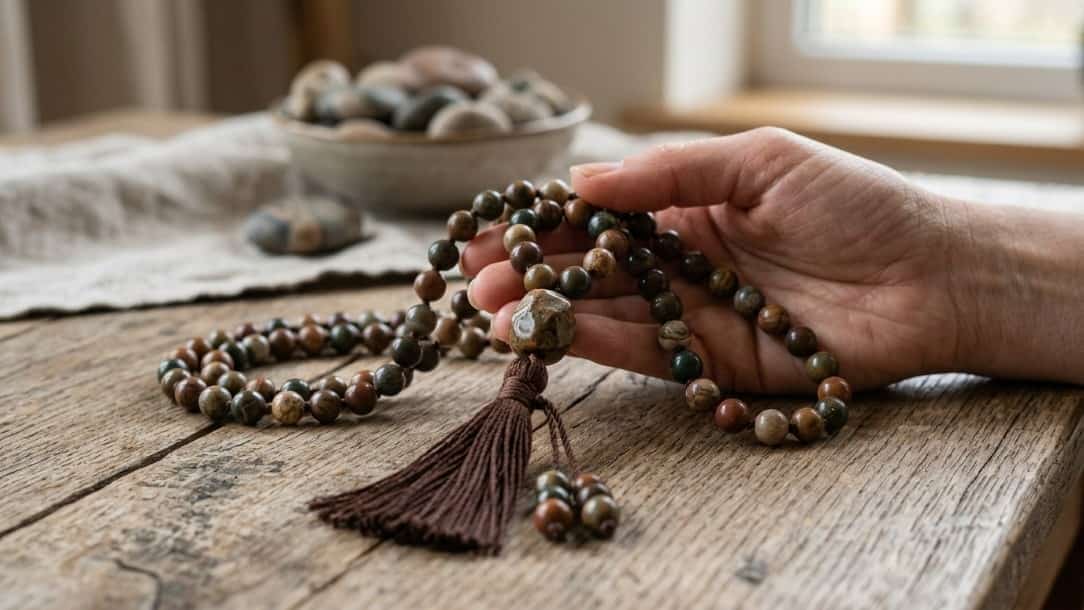
Praying with Prayer Beads (Tasbih)
Counting prayer beads is a traditional practice meant to calm the mind, help a person focus on a single point, and build a spiritual rhythm through regular repetition. It relies on the beads of a tasbih (prayer beads) to recite specific phrases of remembrance (dhikr) in a set, counted order. In this way a person takes part in a physical act of counting while turning inward mentally. The main goal is not just to finish the count. It is also to draw the mind away from outside distractions and settle into calmer, more controlled thinking. When done regularly, it is thought to lower stress levels, gather scattered thoughts, and strengthen a sense of inner balance. Once it becomes a habit, it also gives a short mental pause in the middle of a busy day. In Islamic culture, using prayer beads is a form of worship performed to remember the names of God and to practice dhikr. A tasbih is usually a string of 33, 66, or 99 beads, and each bead is used to repeat one phrase of dhikr. Dhikr means repeating the names of God or set prayer phrases, with the aim of finding spiritual ease and peace. Prayer beads are especially popular with people who want to feel calm, find mental clarity, and reach inner peace.
Intention matters a great deal when you begin. It means that the dhikr is done sincerely, turning toward God. The beads are usually held in the right hand, and the fingers move from one bead to the next as each phrase is spoken. The most common phrases are "Subhanallah" (God is free of every imperfection), "Alhamdulillah" (All praise belongs to God), and "Allahu Akbar" (God is the greatest). While counting, the words are spoken not only with the tongue but also with the heart and mind, turned toward God. The spiritual benefits of this practice are regarded as great. Dhikr may help a person find inner peace by purifying the heart and spirit. It is also a form of worship that builds patience and order. Regular use of prayer beads may strengthen a sense of piety in the heart and deepen a person's devotion to God. This practice may also help people cope with stress and step back from the difficulties of daily life. Beyond being an act of worship, prayer beads are also regarded as a tool for mental relaxation and spiritual cleansing.
Counting Prayer Beads
Counting prayer beads is both a spiritual practice and a tradition many people choose to find inner balance. In Islamic culture, prayer beads used for dhikr are a counting aid for worship, and through them a person's mind is said to grow clearer and the heart to find peace. It is regarded not only as a religious practice but also as a form of meditation. This practice may help the mind and spirit rest and ease stress.
Prayer beads usually have 33, 66, or 99 beads, and each bead stands for the repetition of one word or prayer. The beads are moved with the fingertips of the right hand, one after another. This process may help a person focus, concentrate more deeply, and step away, even briefly, from the clutter of daily life. A ritual done in the morning or evening is said to make a meaningful contribution to a person's spiritual life and to leave them feeling at ease. Counting prayer beads is a way to build a spiritual bond, find calm, and reach peace. As the mind is cleared, a balance forms between what the tongue says and what the heart feels. Some people also say that the movement of the fingers and hands may loosen the muscles and help release long-held tension. At Taş Sandığı, we care about prayer beads that matter for more than how they look. They are also cherished for their spiritual meaning.
Using Natural Stone Prayer Beads
Using natural stone prayer beads means reciting set phrases of dhikr, or counted repetitions, in a steady rhythm on the beads of a prayer string made from natural stones. This practice is thought to improve mental focus and give the person a calmer flow of thought. Each stone used is considered to have its own texture, weight, and surface feel, and these differences are known to shape how the beads feel as they are counted. For this reason, some natural stone prayer beads are thought to move more smoothly, while others give a heavier, more defined feel. Natural stone prayer beads are seen not just as a way of counting or repeating, but as a rhythmic practice that helps a person concentrate, and with regular use they are said to help reduce mental clutter. There are many beliefs about the nature of these stones.
What Does It Mean to Use Prayer Beads?
What does it mean to use prayer beads? It means reciting set phrases of dhikr or repetitions in a regular, counted way on a string of beads, and the practice rests on a rhythmic structure that aims to improve mental focus. In this process the person does not simply follow the numbers. They also concentrate on the phrase being repeated and try to hold the mind on a single point. Over time this is considered to lengthen attention span, slow the flow of thoughts, and reduce mental clutter. What does it mean to use prayer beads? It is also regarded as a mindfulness practice that helps a person build a more inward connection with themselves. Through regular repetition, the mind is thought to settle into a calmer state, and the person to become more resilient to everyday stress.
How to Use Prayer Beads
How do you use prayer beads? The practice begins in a quiet place free of distractions, and the person first prepares mentally. Then the beads are moved one by one, and on each bead the chosen phrase of dhikr is repeated. The most important point is to follow the count steadily and to keep the mind on the repetition. How do you use prayer beads well? The rhythm needs to be steady and balanced, because repetitions that are too fast or uneven can make it harder to focus. At the end of each round, there is a short pause before starting again, which creates a sense of mental cycle and awareness. With regular practice, a person is thought to gain more control over their thoughts and to develop a calmer mindset.
The Order of Dhikr with Prayer Beads
The order of dhikr refers to reciting phrases or repetitions one after another in a set sequence, which helps the practice move forward in a more organized way. With this sequence, a person knows which repetition comes when and can follow the process without mental confusion. Any type among the prayer bead models moves in counted groups, and when each group is finished, the person moves on to the next stage. This sequence helps the practice find a rhythmic flow and is thought to strengthen mental focus. It also lets the repetitions be done more consciously and keeps the process more controlled. In Islam, the order of dhikr refers to the sequence followed when reciting. This order rests on a fixed structure meant to support mental and spiritual focus. Generally, each bead on the string is used to repeat one of the names of God or one prayer phrase. The usual order consists of three main phrases: "Subhanallah" (God is free of every imperfection), "Alhamdulillah" (All praise belongs to God), and "Allahu Akbar" (God is the greatest). These phrases are repeated through a session of prayer beads and are said to help a person find spiritual peace and stillness.
The order of dhikr usually goes as follows. First, the person sets an intention and begins by saying "Bismillahirrahmanirrahim." Then, moving through the beads, they repeat "Subhanallah" 33 times, "Alhamdulillah" 33 times, and "Allahu Akbar" 34 times. This sequence is common on a string of 99 beads. Some people also add a particular prayer or word for each bead, but in general these three main phrases form the core of the order.
The order of dhikr also brings a person discipline and keeps thoughts from scattering while reciting. Regular use of prayer beads helps build patience and faith. Beyond being a mere ritual, the order of dhikr is regarded as a form of worship that deepens devotion to God. It is said to give a person spiritual focus, peace, and a sense of inner cleansing.
Tasbih Order
In Islamic culture, the tasbih order holds an important place both as a discipline of worship and as a way of spiritual focus. The dhikr said after prayers is usually done in a set order, and this order helps a person move away from distraction and concentrate on remembering God. In common practice, "Subhanallah," then "Alhamdulillah," and finally "Allahu Akbar" are each repeated thirty-three times. This sequence stands for first declaring God free of every imperfection, then giving thanks for His blessings, and finally acknowledging His greatness. The beads make these repetitions easier to count, and they also give worship a rhythmic, calming dimension. As each bead passes between the fingers, a stillness settles inside the person, and breath, thought, and prayer meet on the same line. The tasbih order is not merely mechanical repetition. Done with awareness, it deepens a person's gratitude, builds patience, and makes room for a spiritual reckoning away from the rush of daily life. A tasbih habit learned from elders is also a religious and cultural tradition passed down from generation to generation. Dhikr done together with a congregation in a mosque strengthens a sense of unity, peace, and shared worship. Whether someone uses prayer beads after prayer or at any other time of day, the real value lies in the sincerity of the intention and in what the dhikr leaves in the heart. For this reason, the tasbih order is not just the repetition of certain words a set number of times. It is a simple yet deep expression of a person's effort to turn to their Lord, give thanks, purify themselves, and find spiritual balance.
Using Prayer Beads After Prayer
This practice is done to carry on the spiritual peace after worship and to keep the mind calm. In it, set phrases of dhikr are repeated regularly, and a person can stay in the stillness that follows worship for longer. What about using prayer beads after prayer? This practice helps a person collect their thoughts after worship and brings a more balanced state to mental intensity. When done regularly, it is thought to increase spiritual awareness and to help a person feel more at peace.
Using Prayer Beads During Prayer
This refers to repetitions of dhikr done during worship or in connection with it, and the practice is thought to help a person focus more deeply during worship. The aim is to draw the mind away from scattered thoughts and direct it fully toward the act of worship. What about using prayer beads during prayer? Through rhythmic repetition, attention becomes steadier, and the person is considered to reach a more peaceful state of mind during worship. This practice is also thought to increase inner awareness and to help a person feel a stronger connection to worship. When done regularly, it is considered to balance mental intensity and create a calmer state of focus.
The Sequence of Dhikr with Prayer Beads
This refers to a systematic structure in which different phrases or repetitions are done one after another according to a set plan. This structure lets the practice move forward in a conscious order rather than at random, and it helps a person have a more controlled experience. What is the sequence of dhikr with prayer beads? It usually moves through set groups of counts and cycles of repetition, and when each stage is finished, the person moves to the next rhythm. This order is thought to reduce mental confusion and lengthen the span of focus. This sequence lets a person do the practice more consciously and is considered to build a rhythmic inner discipline.
Types of Prayer Bead Practice
This refers to the different versions of the practice, shaped by different rhythms, different purposes, and different habits. This variety can differ in everything from the structure of the beads used to the speed and intensity of the repetitions. What are the types of prayer bead practice? Some are done with faster, shorter repetitions, while others are done in a slower way that calls for high attention and deep focus. These differences are thought to be chosen according to a person's state of mind and daily needs. The material of the beads and the size and number of the beads are also considered to affect these types. For this reason, using prayer beads is seen as a flexible practice that is not tied to a single mold and is shaped by a personal rhythm.
Frequently Asked Questions About Using Prayer Beads
Which prayer beads are best for counting?
The right model usually depends on a person's hand habits and how they plan to use the beads. People who want a smoother flow tend to choose models where the beads pass easily, while those who want a more distinct feel in the hand can choose materials of a different hardness. The balance of the prayer beads and the craftsmanship of the beads play an important role in this choice.
Are fire amber prayer beads suitable for counting?
Fire amber prayer beads are thought to make the rhythm easier while counting, thanks to how smoothly they move in the hand. Their light weight and shiny look make them a popular choice for both everyday use and regular dhikr. The feeling of fluid motion during use is one of their most noticeable features.
What does an Oltu stone prayer bead string feel like to count?
Oltu stone prayer beads are thought to take the counting experience to a different level, thanks to a structure that warms slightly in the hand as it is used, and to their natural feel. The fact that the stone gains a shinier look over time is another reason users choose it. It is usually preferred by those who want a more classic, traditional feel.
Is there a difference between amber prayer beads and pressed amber prayer beads?
Amber prayer beads and pressed amber prayer beads are considered to differ in how they are made. Natural amber is thought to come from fossilized resin, while pressed amber is known to be a more processed material. When counting, both can offer a different weight and flow, and this affects user preference.
Is there a difference in use between 33-bead and 99-bead prayer beads?
33-bead and 99-bead prayer beads are usually chosen based on the purpose of use and the number of repetitions. A 33-bead string is considered suitable for shorter, more practical use, while a 99-bead string is preferred for a longer, more regular flow of dhikr. When counting, this difference directly affects how long the rhythm lasts.
Which prayer beads are the most comfortable to count?
The most comfortable prayer beads are generally considered to be models with smoothly finished beads and a well-balanced cord. Prayer beads with an even weight distribution are thought to move more fluidly in the hand. For this reason, when choosing, the quality of craftsmanship matters as much as the material.
Are wooden prayer beads suitable for everyday use?
Wooden prayer beads are among the models often chosen for everyday use because of their light weight. They feel natural in the hand and do not tire it over long use, so they are seen as a practical option for counting. They are also known to settle into the hand over time.
Do natural stone prayer beads affect how counting feels?
Natural stone prayer beads are thought to change how counting feels because of their different weights and surface textures. Since every stone has a different texture and density, the feel in the hand can vary too. For this reason, users usually try different stones and choose the one that suits their own rhythm.
What should I look for when choosing prayer beads?
When choosing prayer beads, the craftsmanship of the beads, the balance of the cord, the quality of the material, and the feel in the hand are considered important factors. The way you plan to use them also decides the choice. Different models can be chosen for everyday use, for a collection, or for a regular counting habit.
Are handcrafted prayer beads better to count?
Handcrafted prayer beads are thought to offer more evenly shaped beads, and because of this they are considered to create a smoother counting experience. In models made with skilled craftsmanship, having every bead match can help keep the rhythm steady. For this reason, many people regard them as a more special experience.