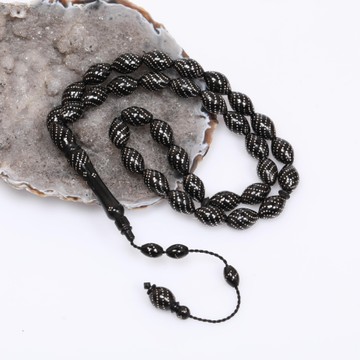
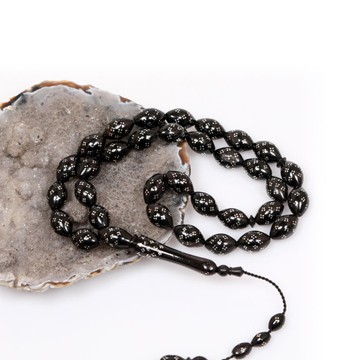
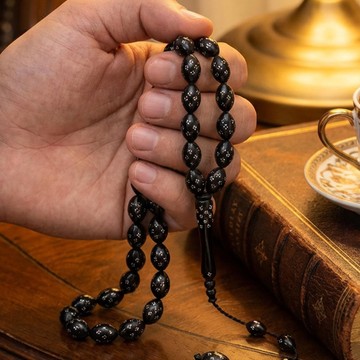
What Are Kuka Prayer Beads Made Of?
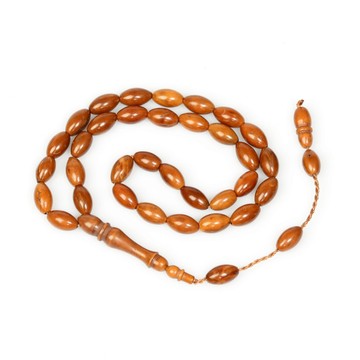
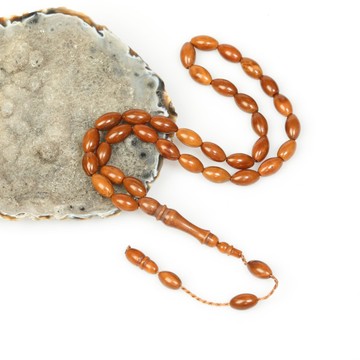
Kuka prayer beads are made from an organic material taken from the fruit of the kuka tree, which is believed to grow in tropical climates, or from the pit structure of that fruit once it has hardened through natural processes over time. In its early stages this natural material is softer, fibrous, and not resistant to outside influences, but it is thought to harden gradually through environmental conditions, loss of moisture, and the natural ripening process. Once the hardening is complete, kuka becomes a durable, workable, long-lasting material that can be used to make prayer beads. No artificial hardening is believed to be applied during production, and the material is said to take shape entirely through its own natural transformation. For this reason kuka is regarded as a special material that keeps its natural character, and prayer bead masters work it with great care. Once use begins, a clear change is seen in kuka prayer beads: the surface, which starts out lighter and matte, darkens over time to a deeper color and also becomes shinier and smoother. This change is thought to be linked to contact with the natural oils of the hand, environmental factors, and how often the beads are used. In this way kuka prayer beads stop being a fixed object and become a natural product that interacts with its user over time and gains a character of its own.
Related: Kuka prayer bead features
How Are Kuka Prayer Beads Made?
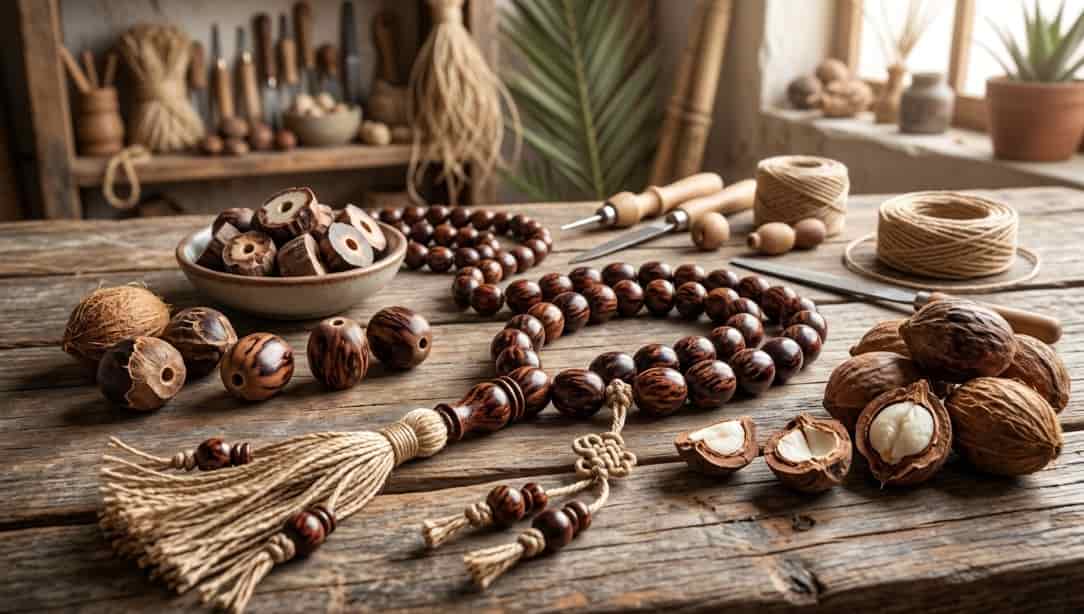
Making kuka prayer beads is a detailed process that relies entirely on handwork and takes patience and skill, and every stage is built around shaping the material without harming its natural structure. The natural kuka fruit is first put through a long drying process under suitable humidity and temperature conditions. During this process the excess moisture inside the fruit is thought to leave, and the material is thought to become harder, more durable, and easier to work. After drying is complete, the material is carefully selected against the risk of cracking or deformation and cut into small pieces that match the basic measurements of the beads. This stage is considered critical so that the finished prayer beads will have both a pleasing and a balanced structure. Then comes turning on the lathe, where each piece is worked one by one into a round, oval, or other desired shape. Precision to the millimeter matters a great deal at this point, because how well the beads match each other directly affects how the prayer beads flow in the hand. Once shaping is complete, the sanding stage begins, and the natural roughness on the surface is removed to give a smoother structure. This step also brings out the natural texture of the kuka material and lays the groundwork for the shine that will develop later. Next, a hole is carefully drilled in each bead and made ready for the cord, and this work is done in a controlled and precise way so that no cracks form. When all the pieces are ready, the beads are strung and brought together in balance. Because the whole process relies on handwork, small differences can appear from one set of kuka prayer beads to the next, and these differences are regarded as a natural feature showing that the piece is a craft product, not a mass-produced one.
Which Tree Are Kuka Prayer Beads Made From?
The material used in kuka prayer beads comes from the fruit of a tropical plant generally known as the kuka tree, which is thought to grow especially in hot, humid, and rainy climate zones. These climate conditions are believed to play a deciding role in the natural development of the fruit. After the ripening process is complete, the fruit gradually loses the moisture in its interior and begins to harden. In the end it becomes a stone-like, dense, and durable structure, and so it becomes a material that can be worked into prayer beads. However, it is believed that not every kind of tree can make this transformation. Only certain kinds of kuka, and examples grown in suitable environmental conditions, can form this characteristic structure. For this reason kuka material is treated as a special natural resource that is limited in nature and cannot be obtained at the same quality in every region. Many factors, such as growing conditions, the structure of the soil, the humidity of the climate, hours of sunlight, and the natural ripening cycle, are thought to directly affect both the durability and the workability of this material. For this reason differences in hardness, texture, and color are believed to appear even among fruit taken from the same kind of tree, and this gives each set of kuka prayer beads its own character.
How Can You Tell Whether Kuka Prayer Beads Are Authentic?
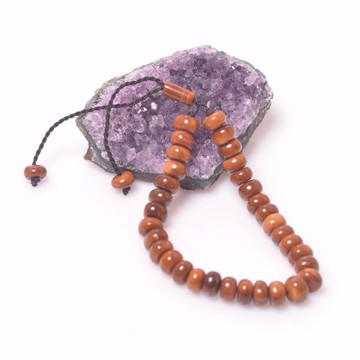
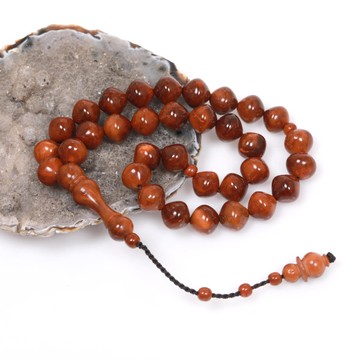
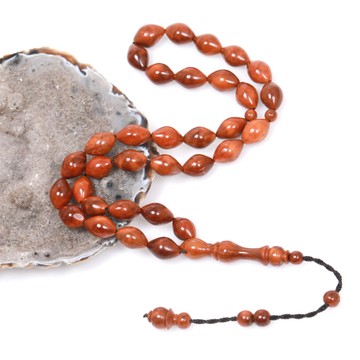
The most distinctive feature of natural kuka prayer beads is a structure that visibly changes over time with use, and this change is regarded as one of the main characteristics that set them apart from many other kinds of prayer beads. When first made, kuka beads have a lighter tone and a matte, relatively dry surface. As regular use continues, they gradually darken and take on a deeper, richer color. This change is thought to be linked to contact with the natural oils of the hand, environmental factors, and how often the beads are used. A clear evolution also takes place in the surface structure. The structure, slightly rough at first with a more pronounced natural texture, turns over time into a softer, smoother form that feels slick in the hand. This process is read as the natural material having a "living" character, and it makes each set of prayer beads develop differently along with its user. In authentic, natural kuka prayer beads this transformation is quite noticeable, while in synthetic or treated products the same effect is not seen and the surface stays largely the same. This is regarded as an important indicator for telling genuine products from fake ones. A faint, natural scent can also sometimes be noticed in genuine kuka prayer beads, and this is regarded as another sign of naturalness, thought to come from the fully organic structure of the material.
How Can You Tell the Quality of Kuka Prayer Beads?
A high-quality set of kuka prayer beads shows itself first through its craftsmanship details. Beads of similar size and surfaces worked evenly and smoothly are important signs of quality. Properly drilled holes let the prayer beads move more freely during use. In quality products there are no gaps, cracks, or irregularities between the beads. The balance of the stringing is another important criterion. Prayer beads that move comfortably in the hand and give a sense of flow are regarded as having a higher level of craftsmanship. Quality shows not only in the material but also in the details of the master's work.
How Can You Tell Whether Kuka Prayer Beads Are Genuine?
Genuine kuka prayer beads are recognized by the natural change they show over time. Above all, the color darkening and the surface becoming shinier as use increases is one of the most important features. This natural transformation is regarded as a structural property of the material. Genuine kuka prayer beads give a warmer, softer feel over time when held in the hand. This kind of change does not happen in artificial products, and the surface stays the same. A slightly porous natural structure can be seen in genuine products. This structure is regarded as one of the signs that the material is fully natural.
Handmade Kuka Prayer Beads
Handmade kuka prayer beads rest on a special approach to production in which masters shape the beads entirely by hand and every stage is carried out manually. In prayer beads like these, each bead is worked, measured, and smoothed individually with care. Unlike mass-produced products, small differences in detail can be seen in handmade models, and this is regarded as something that adds to the product's naturalness and originality. In the handmade process, the kuka material is first dried and then shaped one bead at a time on the lathe. Because the master works each bead by feeling it in the hand, the balance and flow of the prayer beads are shaped in a more controlled way. For this reason handmade kuka prayer beads are regarded as objects that are not only a tool for use but also carry craft value.
Prices of Handmade Kuka Prayer Beads
The prices of handmade kuka prayer beads vary depending on the quality of the material, the detail of the craftsmanship, and the time it takes to make them. It is not considered right to speak of a fixed price range for products like these, because every set of prayer beads goes through its own process of labor. In hand-worked models especially, the master's experience, the precision with which the beads are worked, and the overall aesthetic structure are among the main factors that shape how the price is perceived. Features such as the naturalness of the kuka material and the color change it shows during use are also seen as factors that increase perceived value. Handmade products take longer to complete than mass-produced alternatives, so they are placed in a more special category.
How Can You Tell a Quality Kuka Prayer Bead Set?
A quality set of kuka prayer beads shows itself through both its material structure and its craftsmanship details. Beads of similar size and surfaces worked smooth and even are important signs of quality. A smooth transition between the beads lets the prayer beads be used comfortably in the hand. In quality models there are no visible cracks, deformations, or surface irregularities. Evenly drilled cord holes and balance in the stringing are also important details. Prayer beads that give a sense of flow in the hand during use and become smoother over time are regarded as being of higher quality. Keeping the natural material intact is also counted among the factors that directly affect quality.
How Can You Tell the Quality of Kuka Prayer Beads?
The quality of kuka prayer beads can be judged at first glance by the craftsmanship details and the quality of the surface finish. In a quality set, every bead has a symmetrical structure and the overall look is harmonious and unified. A well-worked surface improves both the appearance and the comfort of use. How evenly the beads rub against each other is also an important criterion for quality. Models strung too tightly or too loosely can be uncomfortable to use. In quality products this balance is achieved with skill. The surface gaining a natural shine over time is also regarded as one of the important features of quality kuka material.
How Can You Tell Whether Kuka Prayer Beads Are Genuine?
Genuine kuka prayer beads are told apart by the natural change they show over time. The surface darkening and turning shinier as use increases is one of the most distinctive features. This change is thought to come from natural contact and environmental factors. In genuine products a softer, warmer feel also develops over time when the beads are held in the hand. In artificial or treated products this natural transformation does not occur and the surface stays the same. A slightly porous natural structure can be seen in genuine kuka prayer beads, and this is counted among the signs that point to the product's naturalness.
Features of Natural Kuka Prayer Beads
Natural kuka prayer beads are regarded as a special product that changes over time because of its organic structure. When first made, these prayer beads have a more matte and lighter tone, and as use goes on they darken and take on a shinier look. This change is thought to come from contact with the natural oils of the hand. Natural kuka material is known for its light and durable structure. That it can keep its form even through long use places it among the preferred products. Keeping the natural structure intact is regarded as an important factor that directly affects the value and the quality of use of the prayer beads.
Frequently Asked Questions About What Kuka Prayer Beads Are Made Of
How Can You Tell What Kuka Prayer Beads Are Made Of?
Kuka prayer beads are generally made from the fruit pit, or the hardened natural structure, of the kuka tree, which is believed to grow in tropical regions. This structure is thought to harden over time until it can be worked. Genuine kuka prayer beads have a natural texture feel, and as use goes on the surface can be seen to darken in color. This change is believed to come from natural contact and environmental factors.
Why Do Kuka Prayer Beads Change Color With Use?
The color change of kuka prayer beads over time is known as one of their most striking features. It is thought to depend on contact with the natural oils of the hand and how often the beads are used. The surface, lighter and matte at first, can darken over time and turn into a shinier structure. This change is regarded as a characteristic feature of the natural material.
How Can You Tell Genuine Kuka Prayer Beads From Fake Ones?
In genuine kuka prayer beads a natural transformation is seen over time, while in fake or synthetic products this change is generally not seen. Genuine products can feel softer the more they are used in the hand, and their surface structure can take on a different look over time. In synthetic products, color and texture tend to stay the same. This difference is regarded as the basic distinction between a natural structure and artificial production.
How Can You Tell Whether Kuka Prayer Beads Are High Quality?
In high-quality kuka prayer beads, the harmony and balance of size among the beads stand out. A well-worked surface creates a smooth feel in use. Evenly drilled holes and a balanced stringing are important factors that affect quality. Gaining a natural shine over time is also regarded as one of the features of quality products.
Where Are Kuka Prayer Beads Used?
Kuka prayer beads are generally preferred for everyday use, for collecting, or as a personal accessory. Some people see them as a soothing object, while for others they are part of a traditional habit. The range of uses is quite wide and can vary entirely with personal preference.
Why Are Kuka Prayer Beads Considered Valuable?
One of the main reasons kuka prayer beads are considered valuable is their natural structure and the way they change over time. In handmade models, the fact that each piece is unique also raises the perceived value. The material being rare and the labor its working takes are also regarded among the factors that support this perception.
How Do You Care for Kuka Prayer Beads?
For the care of kuka prayer beads, it is generally recommended to keep them away from chemical products. Wiping them with a lightly damp cloth is considered enough to preserve the natural structure. The surface is thought to gain its own shine over time through contact with the natural oils of the hand. Keeping them away from very hot and humid environments may help preserve their form.
What Should You Watch for When Using Kuka Prayer Beads?
When using kuka prayer beads, it is recommended not to expose them to hard knocks and not to keep them in very humid environments for long periods. Because they are a natural material, they are believed to be affected by outside factors over time. Regular and gentle use contributes both to keeping their look and to a long life.
Why Do Kuka Prayer Beads Get Shinier Over Time?
The shine kuka prayer beads gain over time is thought to come from contact with natural oils and the process of use. The surface, matte at first, can turn smoother and shinier as use increases. This change is regarded as a characteristic feature of the natural material and can raise the product's perceived value.
Are Kuka Prayer Beads Preferred as a Collector's Item?
Because of their natural structure and their look that changes over time, kuka prayer beads are often preferred by collecting enthusiasts. The small differences each piece carries because of handwork can make it more special. The color change that develops over time is seen as an important feature for collector value.