Which Wrist Do Men Wear a Bracelet On?
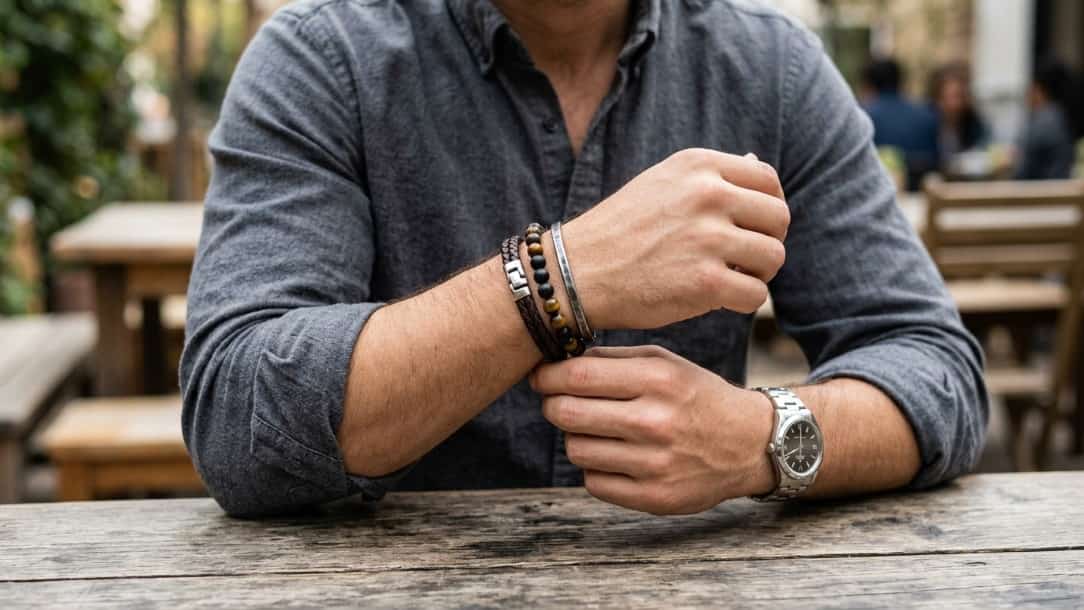
Which wrist do men wear a bracelet on? It is treated less as a firm rule and more as a matter shaped by personal style, comfort and daily habits. The most common approach is to wear the bracelet on the wrist that does not carry a watch, because this is more comfortable during movement and reduces the irritation that accessories can cause when they touch each other. The hand you use more actively moves constantly, so choosing the opposite wrist exposes the accessory to less friction and helps it last longer. Visual balance matters too: avoiding a heavy pile of accessories on a single wrist gives a cleaner, more orderly look. In terms of style, how well the accessories go together matters more than which wrist is chosen, and with pieces like a natural stone bracelet, both aesthetics and personal meaning can come into play. In the modern view, there is no firm rule, and the choice can vary entirely with personal preference and comfort.
Which Wrist Does a Bracelet Go On?
Wearing a bracelet is considered, for men, a way of wearing an accessory that is shaped entirely by personal preference, daily habits and style balance. In general practice, wearing the bracelet on the wrist without a watch is more common, because this approach is more comfortable during movement and reduces the irritation that accessories can cause when they touch each other. Since the hand used more actively in daily life moves more, choosing the opposite wrist is seen as an advantage for both comfort and keeping the accessory in good shape for longer. Aesthetically, a more balanced and simple look, rather than heavy accessory use on a single wrist, fits modern style better.
Which Wrist Do Men Wear a Bracelet On? Common Practice
The most common approach for men is to choose the non-dominant wrist. The hand used more actively in daily life is always in motion, so the accessory is exposed to more friction and may wear out faster over time. Choosing the less-used wrist therefore improves comfort and helps the bracelet keep its shape for longer. It is also thought to give a more balanced look visually, because spreading the accessories out, instead of concentrating them on one wrist, strengthens the overall style. When other accessories such as a watch, a ring or a chain are worn too, the choice of bracelet matters even more, and balance comes to the fore in putting together a harmonious outfit. For some people, wearing accessories is not only about aesthetics but also a form of personal expression, and at this point the chosen wrist varies entirely with individual habits. With natural stone bracelets in particular, choices can become more personal, because such accessories are believed to carry both energy and symbolic meaning. Taking all of this into account, there is no firm rule about which wrist a bracelet goes on. It is shaped mostly by comfort, habit and sense of style.
Which Wrist Does a Man's Bracelet Go On?
A wrist that already carries a watch can look crowded with an extra accessory, so people who prefer a cleaner look often find it more suitable to put the bracelet on the free wrist. This approach keeps the accessories from touching each other and creates a more orderly style. How much you move during the day also influences the choice. Wearing the bracelet on the wrist opposite the more active hand means it takes fewer knocks and is more comfortable to wear. With accessories that include natural stones in particular, aesthetic and symbolic meanings are also thought to influence the choice. In the modern view of style, this is not treated as a firm rule and is shaped entirely by personal taste.
Which Wrist Do Men Wear a Watch and a Bracelet On?
When a watch and a bracelet are worn together, putting them on different wrists creates a more balanced and attractive look. Two accessories on the same wrist can look crowded in some cases, so most people find it better to wear the two pieces on separate arms. Because the watch is seen as the more dominant accessory, moving the bracelet to the other arm both keeps the look balanced and adds comfort while wearing. Easier wrist movement in daily life and accessories that do not rub against each other are also important points that support this approach.
Which Wrist Does a Bracelet Go On for Men?
The most common approach for men is to choose the non-dominant wrist. The main reason is that the hand used more actively in daily life moves the wrist more, so the accessory is exposed to more friction. The less-used wrist is seen as more suitable for both comfort and keeping the accessory in good shape for longer. It is also thought to look more balanced, because spreading accessories out, rather than concentrating them in one spot, creates a simpler style. This approach is not a firm rule and can vary entirely with personal preference.
Which Wrist Should a Man Put a Bracelet On?
The choice of wrist is shaped by daily habits, comfort and a sense of style. Choosing the less-used wrist makes movement easier and helps the accessory wear out less. It also gives a simpler look in terms of visual balance, because the accessory is not concentrated in a single area. Style today is quite flexible, so there is no firm limit on this, and each person can put together different combinations according to their own taste. Wearing a bracelet is therefore seen as entirely a matter of personal style.
Frequently Asked Questions About Which Wrist a Bracelet Goes On
Which wrist do men wear their bracelet on?
Men generally wear a bracelet on the non-dominant wrist, because this is more comfortable in daily movement and helps the accessory wear out less. That said, there is no firm requirement in terms of style, and personal preference is always seen as the deciding factor.
Can you wear a watch and a bracelet on the same wrist?
You can wear a watch and a bracelet on the same wrist, but this often looks crowded, so it calls for careful balance. People who want a cleaner look usually put the two accessories on different wrists.
Is the left or the right wrist the better choice?
The choice of wrist depends entirely on a person's daily habits. The opposite wrist is generally chosen so that the dominant hand is strained less, but there is no single right answer.
Does wearing a men's bracelet affect your daily style?
A bracelet is seen as a small but eye-catching detail in men's style. When chosen well, it can complete an outfit and strengthen the overall look.
Which wrist looks better?
What matters for style is not the wrist but the design of the bracelet and how well it goes with the outfit. When it matches your clothes and other accessories, it can look good on either wrist.
Where should someone who wears a watch put a bracelet?
An extra accessory is usually not added to the wrist that carries a watch. The bracelet is therefore often worn on the other wrist for a more balanced look.
Does a bracelet get in the way in daily wear?
With the right size and the right material, a bracelet does not cause discomfort in daily wear. Lightweight, well-matched designs usually stay comfortable all day.
What does choosing a natural stone bracelet say about you?
Bracelets with natural stones are believed to carry both aesthetic and symbolic meanings. For many people, such accessories are not just a style piece but also a form of personal expression.
Should a bracelet always be worn on the same wrist?
Wearing it on only one wrist is not required. A person can switch wrists according to comfort and style, and this depends entirely on personal preference.
What should you look for when choosing a men's bracelet?
When choosing a bracelet, consider the shape of your wrist, your daily habits and how well it goes with your other accessories. Weighing comfort and aesthetic balance together leads to a better choice.