Are Prayer Beads Buddhist Symbols?
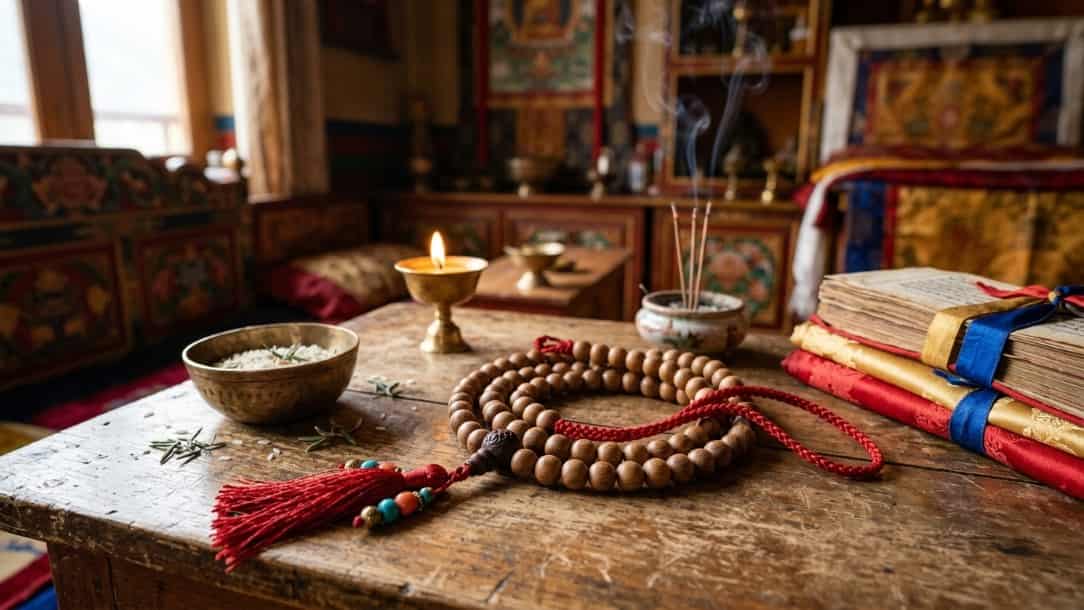
People often draw visual and structural parallels between the spiritual tools of Buddhism and the devotional objects of other faiths. The Buddhist counting strand known as the mala sits at the center of these comparisons. From the outside, it looks like an ordinary set of prayer beads, with a similar string of beads held in the hand. Within Buddhist teaching, though, the resemblance is seen as a surface parallel. In Buddhism, objects are not holy symbols. They are tools that help build mental awareness. From this point of view, a mala is less a symbol of faith than an aid that keeps meditation steady and focused. Malas are used mainly to count mantra repetitions. They help keep the mind from wandering and bring attention back to the present moment. As each bead is turned, the repetitions settle into a rhythm, and that rhythm is thought to help meditation deepen into a lasting state of awareness. The aim of Buddhist philosophy is to develop inner experience, not to load outer objects with meaning. So the mala is treated as a practical tool that supports mental training, not as an object of worship. For this reason, the idea that prayer beads carry a direct symbolic meaning in Buddhism is not generally accepted. Instead, such tools are thought to help discipline the mind, slow the flow of thoughts, and strengthen the ability to stay in the moment. Moving from bead to bead during meditation is expected to be done with conscious awareness, and this is said to bring a person closer to inner stillness. Using a mala is therefore more than mechanical counting. It is a mental training practice, closely tied to the core Buddhist ideas of awareness, balance, and mental clarity.
Related content: How do you use prayer tasbih?
Prayer Beads in Buddhism
Counting strands are among the main aids to meditation in Buddhist traditions. Known as a mala, this strand has 108 beads and helps keep track of mantra repetitions. The practice is seen as a way to sharpen mental focus. During meditation, the strand helps reduce distracting thoughts. Each repeated mantra is matched with one bead, which is meant to keep the mental rhythm steady. People choose this method especially for long meditation sessions, to reach a deeper state of awareness. Malas can be made from different materials. Wood, natural stone prayer beads, and plant seeds are the most common. Some traditions believe each material carries its own meaning. These readings rest on cultural and spiritual views, not on fixed rules.
Buddhist Prayer Beads
These counting strands, used in Buddhist meditation, are seen as part of mental discipline and not only as a technical tool. They keep mantra repetitions regular and support the continuity of meditation. The goal is to turn the mind away from outside stimuli and build inner balance. Each bead counts as a step in the process of awareness, which gives meditation a rhythmic shape. In the Buddhist view, such tools are practical aids to mental development, not outward signs of faith. They gain meaning through the experience of practice, not as material objects.
What Do Buddhist Prayer Beads Look Like?
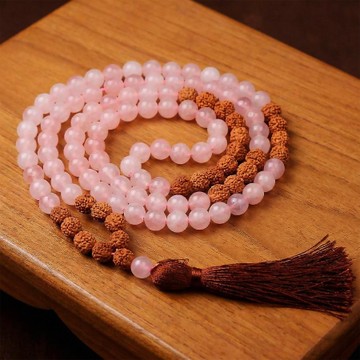
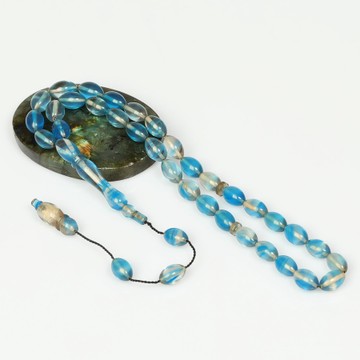
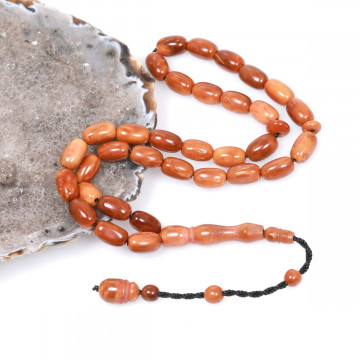
Buddhist counting strands have a standard structure of 108 beads. One additional main bead marks the start and end of the cycle. During use, the beads are turned between the fingers to count mantra repetitions. The main purpose of this structure is to reduce mental scatter and improve focus during meditation. Every movement is made consciously, and the practice is seen as supporting the level of awareness. The materials vary widely. Wood, natural stones, seeds, and some plant-based materials are the most common choices. The choice depends on personal preference and traditional practice. In the Buddhist view, what matters is not the physical quality of the object but what it adds to the meditation.
Buddhist Prayer Bead Models
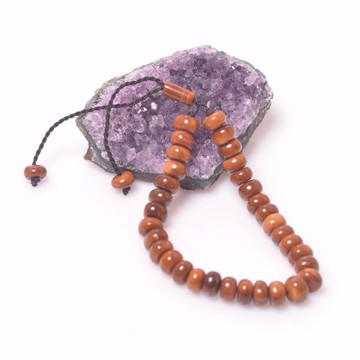
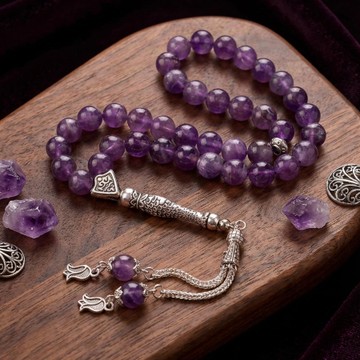
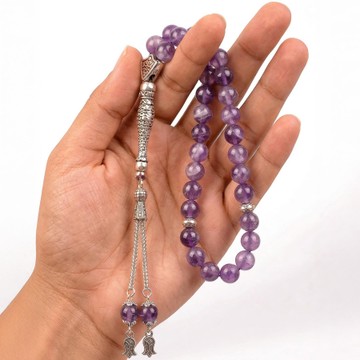
Counting strands used in Buddhist traditions come in a range of designs and materials. These prayer bead models differ in appearance and in how people like to use them. The classic 108-bead form is the most common, but shorter versions and bracelet-style alternatives also exist. Wood-based models are among the most popular for their natural, simple look. Models made with aromatic materials such as sandalwood are believed to have a calming effect during meditation. Models made from natural stones are also widespread. Beliefs that these stones carry different energies are one reason people choose them. Seed-based designs offer a more traditional, natural look. Their light weight makes them comfortable over long sessions. Some models also include metal details or decorations. These designs follow personal preference and aesthetic taste.
Using Prayer Beads in Buddhism
In meditation practice, using a counting strand is seen as an important way to support mental focus. The beads are turned one by one to count mantra repetitions, which helps keep the mind from wandering. The aim is not to suppress thoughts but to bring them under control and reach a more conscious state of awareness. Each bead is linked to one repetition or one breath cycle. This gives meditation a more regular, rhythmic structure. During use, attention is directed fully to the present moment. The practice is thought to help reduce mental clutter. In long meditation sessions especially, the strand becomes an important support for keeping focus.
The Meaning of Prayer Beads in Buddhism
Counting strands in Buddhist traditions are seen not only as physical tools but also as a representation of mental discipline. Each bead can be read as a step in the process of awareness, and this supports the continuity of meditation. The circular form of the strand carries symbolic readings linked to the flow of life and to mental repetition. These readings are not fixed rules, though, and they vary with different cultural perspectives. The basic approach is to help calm the mind. For this reason, these strands are regarded as practical tools for awareness more than as symbolic objects. Their purpose is to strengthen inner balance and gather attention on a single point.
Prayer Beads and Meditation in Buddhism
Counting strands used in meditation are seen as an important aid for strengthening focus. Repeating mantras in a regular way helps keep the mental rhythm steady. In this process, each bead counts as a moment of awareness. This approach helps a person stay in the present and reduces the uncontrolled scattering of thoughts. The strand is widely used, especially in deep meditation work. It is regarded as more than a physical aid. It is also part of mental discipline. For this reason, it holds an important place in meditation practice.
Materials of Buddhist Prayer Beads
The materials used to make counting strands cover a wide range. Wood, natural stones, and plant seeds are the most common. The choice follows both aesthetic taste and traditional views. Aromatic woods such as sandalwood are favored because they give off a pleasant scent during long use. For models made from natural stones, people believe that different stones carry different meanings. These readings have no firm scientific basis. They depend on cultural and spiritual beliefs. Seed-based models stand out for their natural look and light weight. Because they are easy to use, people favor them especially for long meditations. Each material can give a different feel, depending on the user's experience.
The Historical Origin of Prayer Beads in Buddhism
The origin of counting strands reaches back to ancient meditation traditions. Over time, similar structures appear in different cultures. This is read as a reflection of the universal human need to focus the mind. In Buddhist traditions, these strands were developed to keep mantra repetitions in order and make meditation more systematic. Designs emerged in different regions over time, but the basic purpose has largely stayed the same. Through history, the tool has remained an important aid to meditation practice, and it is still used for the same function today.
Frequently Asked Questions About Prayer Beads as Buddhist Symbols
Is the mala used in Buddhism the same as prayer beads?
The mala used in Buddhism is a counting tool that looks like prayer beads, but its purpose rests on a different philosophical basis. The mala is used during meditation to keep mantra repetitions in order and to support mental focus. Prayer beads, by contrast, are mostly used for remembrance and counting in other religious practices. So even though they look alike, they are not considered the same in function or cultural meaning.
Are mala strands considered symbols in Buddhism?
Mala strands are thought not to be seen as direct symbols in Buddhism. They are tools that support meditation practice. In the Buddhist view, inner awareness matters more than outward symbols. For this reason, the mala is regarded as a practical aid for focusing the mind more than a symbol of faith. Its purpose is considered to be organizing the meditation process and gathering attention on a single point.
Are prayer beads among the symbols of Buddhism?
Although Buddhism has structures that resemble prayer beads, they are not considered symbolic religious signs. These strands, called malas, are helper tools for counting repetitions during meditation. They may be linked to prayer beads because of the visual similarity, but in Buddhist teaching function comes before symbol. For this reason, they are not placed in a symbol category.
How many beads does a mala have in Buddhism?
Traditional Buddhist malas are mostly considered to have one hundred and eight beads. This number is believed to carry different meanings, and various readings link it to universal cycles or to mental obstacles. Shorter versions also exist. As long as the purpose stays the same, the number of beads can differ with the meditation practice.
How does using a mala help meditation?
Using a mala is seen as a method that helps reduce the mind's wandering during meditation. Each bead stands for one mantra repetition, which gives the practice a rhythmic focus. This makes it easier for a person to stay in the moment and is thought to help reduce mental clutter. In long meditations especially, the tool is seen as an important support.
What materials are Buddhist malas made from?
Buddhist malas can be made from different natural materials. Wood, seeds, and natural stones are the most common options. Aromatic woods such as sandalwood are known to be preferred more often. For models made from natural stones, people believe that different stones carry different effects, but these readings rest on traditional beliefs, not on firm scientific data.
What do natural stone mala models represent?
Mala models made from natural stones are believed to carry different meanings. Some stones are thought to be associated with calm, and others with focus and balance. These meanings can vary with cultural and spiritual readings. In the Buddhist view, what matters is not the symbolic meaning of the stone but what it adds to the meditation.
Is the mala used only in Buddhism?
The mala is most often associated with Buddhist traditions, but similar structures are used in other cultures and spiritual practices as well. Hindu traditions also have similar strands for counting mantras. This shows that tools for supporting mental focus grew out of a shared need across belief systems. The way they are used can vary by culture.
What is the main difference between prayer beads and a mala?
The main difference between prayer beads and a mala is the purpose of use and the philosophical background. Prayer beads are mostly used in religious remembrance and worship, while the mala is meant for meditation and building awareness. Despite the visual similarity, the cultural context of each is different. For this reason, they are not treated as the same tool.
Can a mala be used in daily life?
A mala is not used only during meditation. Some people also use it in daily life. There are cases where it is worn around the neck or wrist and given a symbolic meaning. This use depends mostly on personal preference. Its main function is meditation, but for some people it can also serve as a reminder or a symbolic accessory.