




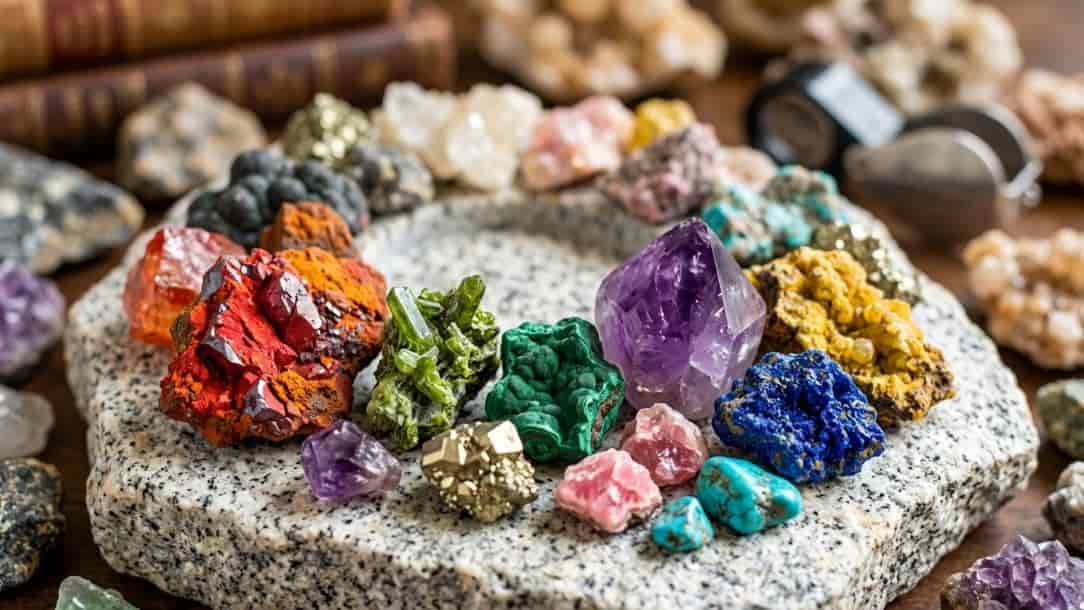
What Gives Rocks Their Color?
The color of a rock varies with the mineral combinations formed over long geological processes in nature. The main factor that shapes a rock's appearance is usually the minerals it contains. Different oxidation states of elements such as iron, copper, and manganese can produce a wide range of colors in rocks, from red to green and from gray to black. This coloring does not depend on a single factor. Formation temperature, pressure, environmental conditions, and chemical changes over time also play a part. For this reason, rock colors are not fixed and can change depending on how the rock formed. These same processes also play a decisive role in the formation of natural stones and help give each stone its own distinct look.
Related content: What is quartz?
Do Minerals Give Rocks Their Color?
Minerals have a clear effect on the coloring of rocks. Different types of minerals reflect light differently and have different chemical compositions. Minerals that contain iron generally lead to red and brown tones, while minerals that contain copper contribute to greenish and bluish colors. Some minerals, such as quartz, can look more transparent or lighter in tone. When a rock contains more than one mineral, the color variety increases and the result is a more complex look. For this reason, the color of a rock is often the result of a mixture of minerals rather than a single one.
Related content: The art of prayer beads
The Substance That Gives Rocks Their Color
The main element that builds the color of a rock is its mineral content. Still, this cannot be reduced to a single substance. During a rock's formation, different elements come together, chemical reactions take place, and environmental factors shape the color. Oxidation in particular can cause clear color changes on a rock's surface. Over time, outside factors such as water, air, and temperature also affect the rock, making its color tones more distinct or fainter.
What gives rocks their color?
The most important factor in a rock's color is its mineral composition. But this alone is not enough. The environment where the rock formed and the physical and chemical processes it went through also have a direct effect on color. For example, rocks formed at high temperatures can develop different crystal structures, and this can change how the color looks. Oxidation and weathering on the surface can also cause color differences to appear over time.
Why are rocks colorful?
The main reason rocks look colorful is the variety of minerals they contain and how those minerals interact with light. Each mineral reflects or absorbs different wavelengths of light. This determines the color we see. In addition, chemical changes during geological processes increase color differences. Even the same type of rock can appear in different colors in different regions, because the conditions of formation are not the same everywhere.
What makes the color of rocks different?
The most important factor behind color differences in rocks is the proportion of minerals. Environmental factors such as temperature, pressure, water interaction, and oxygen level also shape these differences. Every small change during a rock's formation can leave a lasting effect on its color. That is why it is quite common to see rocks of the same type in different color tones in nature.
Do minerals give rocks their color?
Minerals are among the basic building blocks of rock color. Because each mineral has a different chemical structure, each one interacts with light differently. This leads to a variety of rock colors. Mineral density and distribution also affect the process, producing lighter or darker tones. For this reason, studying the mineral structure is very important for understanding the colors of rocks.
Frequently Asked Questions About What Gives Rocks Their Color
Why can the color of a rock change over time?
The color of a rock can change over time because of environmental effects. Factors such as water, oxygen, and sunlight can affect the structure of minerals and start oxidation and dissolution processes. These processes can create different tones on the rock's surface.
Does every type of rock contain the same minerals?
Not every type of rock has the same mineral structure. Igneous, sedimentary, and metamorphic rocks go through different formation processes, so the minerals they contain also differ. This is one of the main reasons for color differences.
What colors do minerals that contain iron produce?
Minerals that contain iron generally produce red, brown, and yellow tones. These colors appear especially when iron compounds in contact with oxygen oxidize.
What colors do minerals that contain copper produce?
Minerals that contain copper mostly contribute to green and blue tones. These colors appear especially when copper oxidizes and forms different chemical compounds.
Can the color of a rock depend on the depth where it formed?
The depth at which a rock forms affects the temperature and pressure it is exposed to, so it can play an indirect role in color. As depth increases, the crystal structure can change, and this can affect color tones.
Why can the same rock appear in different colors?
The same rock can show color differences because it is exposed to different environmental conditions in different regions. Mineral proportions, the level of oxidation, and environmental effects are the main reasons for this difference.
Does mineral density affect color?
Mineral density can directly affect the color tones of rocks. More or less of the same mineral can make a color look darker or lighter.
How does oxidation affect the color of a rock?
Oxidation causes color changes, especially in minerals that contain iron. As a result, red and brown tones can become more noticeable on the surface of the rock.
Is the color of a rock only about minerals?
The color of a rock is largely related to its minerals, but they are not the only deciding factor. Environmental factors such as temperature, pressure, water, and time also play a role in forming color.
Why do different types of rock have different colors?
Different types of rock go through different formation processes, so their mineral content and crystal structures differ. This gives each type of rock its own color structure.